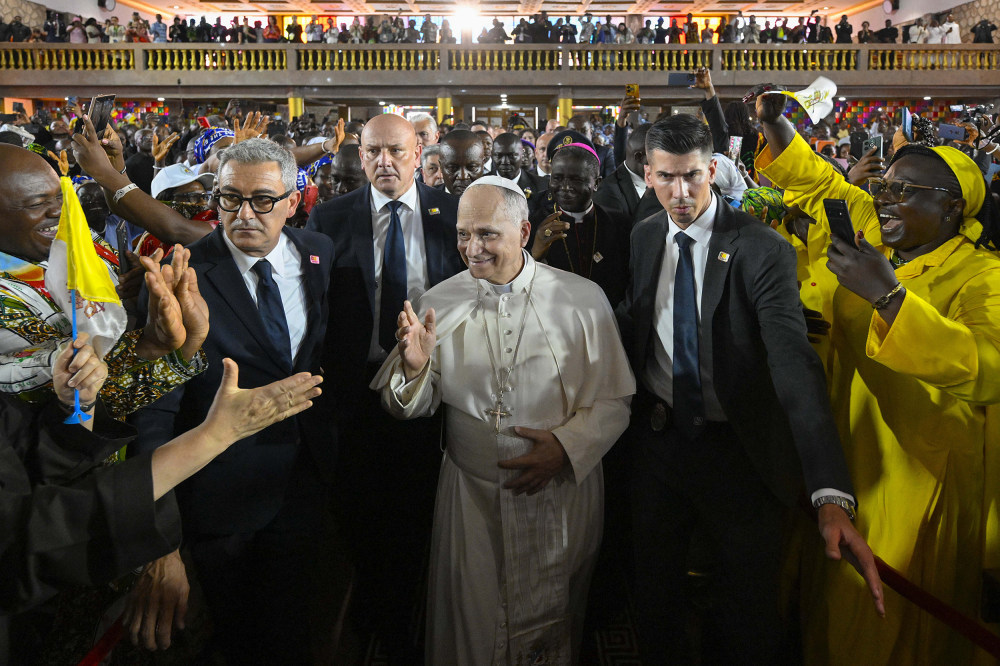
#Africa – Pope Leo XIV has concluded his apostolic journey through Africa with stops in 11 cities, nearly 18,000 km (11,185 miles) of travel, 18 flights, 8 Masses, and numerous addresses/homilies. It marked his third major overseas trip and the first papal visit to Algeria. The tour emphasized Africa’s role as the fastest-growing region for Catholicism (home to over a fifth of the world’s Catholics), with key themes of peace, interfaith dialogue (especially Christian-Muslim coexistence), migration, environment/extractivism, corruption, youth/family, healing from conflict, and upright leadership.
Algeria (April 13–15): Roots, interfaith, and migration
Pope Leo XIV’s trip started in Algiers where he visited the Maqam Echahid Martyrs’ Monument, met President Abdelmadjid Tebboune, addressed authorities/diplomats/civil society, visited the Great Mosque of Algiers (a major interfaith gesture in this Muslim-majority country), and addressed the local community at the Basilica of Our Lady of Africa.
In Annaba (ancient Hippo): Pope Leo made a pilgrimage to St. Augustine’s archaeological ruins, which was personally significant as an Augustinian religious priest. He visited a nursing home run by the Little Sisters of the Poor, met Augustinians privately, and celebrated Mass at the Basilica of St. Augustine.
Through his journey, Pope Leo emphasized Christian-Muslim bridges, homage to migrants lost at sea, and Africa’s early Christian heritage. The pope highlighted everyday mercy as the foundation for peace and presented Algeria as a model of solidarity despite its small Catholic presence.
Cameroon (April 15–18): Peace, anti-corruption, and youth
In Cameroon, the the pope addressed the country’s deep divisions (especially the Anglophone Crisis in the northwest) while celebrating the vibrant, diverse Church. Arriving in Yaoundé, Pope Leo XIV met long-serving President Paul Biya, addressed authorities, visited an orphanage, and met bishops.
Later in Bamenda, the epicenter of separatist conflict), he led a peace meeting with interfaith/community leaders and addressed the crowd. He celebrated Mass at Bamenda International Airport. In his homily and remarks, Leo declared the time for change is “today and not tomorrow,” lamented war’s destruction versus the cost of rebuilding, and warned against “tyrants” and resignation. A separatist alliance even declared a three-day ceasefire during the visit.
In Douala, Pope Leo celebrated a large open-air Mass attended to by ~120,000 in intense heat and one of the biggest events so far. He also urged rejection of violence/corruption and generosity, visited a Catholic hospital and addressed university students/professors on development and moral leadership. In meeting with young people at the university, Pope Leo emphasized the need for the young Cameroonians to stay in their own country rather than venture and migrate to other countries for the purposes of being able to build and improve their own nations, for the better of their own people.
Angola (April 18-21): Marian devotion, social justice, and pastoral care
In this majority-Catholic nation still healing from civil war, Pope Leo focused on hope, overcoming division, and just development. Arriving in Luanda, the pope was welcomed by President João Lourenço. He addressed the authorities, civil society, and diplomats, and challenged leaders to break “cycles of interests” that plunder Africa, referencing colonial exploitation and civil-war scars. He also held private meeting with Angola’s bishops.
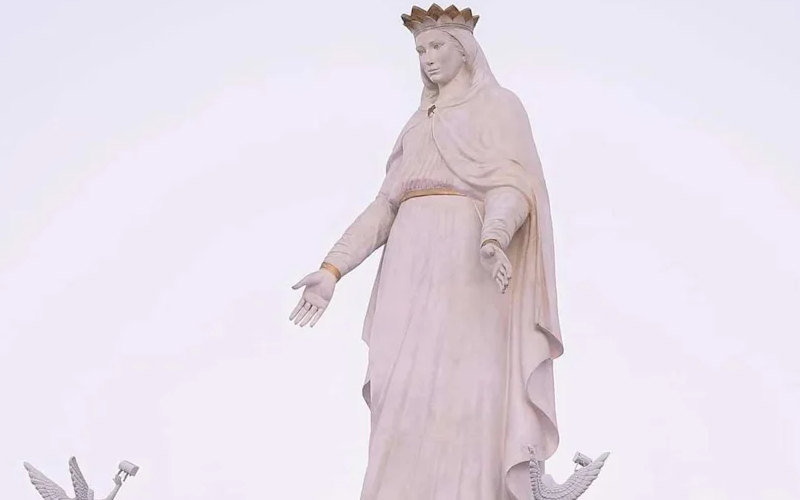
Pope Leo celebrated Mass in Kilamba on Luanda’s outskirts and called the faithful to “build hope” beyond past enmity and corruption. He then took a helicopter to Muxima to pray the rosary at the revered “Mama Muxima” Marian shrine.
Lastly, northeast of Angola, Pope Leo visited a nursing home where many attendees were refugees from the Democratic Republic of Congo). He celebrated Mass at the Saurimo esplanade, and then returned to Luanda for a meeting with bishops, priests, consecrated persons, and pastoral workers at Our Lady of Fatima Parish. His overall tour of Angola blended strong social critique with pastoral warmth and Marian piety—key for Angolan Catholicism.
Equatorial Guinea (April 21-23): Inclusion and Justice
Pope Leo’s tour concluded in this small, overwhelmingly Catholic, Spanish-speaking nation featured pointed calls for ethical governance and hope amid resource wealth and inequality. The pope arrived in Malabo where President Teodoro Obiang Nguema Mbasogo welcomed him. He addressed the authorities, civil society, and diplomats at the Presidential Palace where he urged justice, dignity, and development for the common good, warning against profaning God’s name through domination. He then met with the world of culture at the newly renamed “Leo XIV Campus” of the National University, visited the Jean Pierre Olie Psychiatric Hospital, and then held a private meeting with local bishops.
The next day, Pope Leo flew to Mongomo for Mass at the Basilica of the Immaculate Conception where he called Christians to proclaim the Gospel and shape the nation’s future with justice and peace. He visited the “Pope Francis Technology School.” He then flew to Bata for a prison visit and emphasized God’s love includes the incarcerated. He prayed at the Memorial to Victims of the 2021 explosion, and then had a large meeting with young people and families at Bata Stadium.
On the last day of Pope Leo’s tour, he celebrated Mass at a stadium in Malabo, attended a farewell ceremony, and then departed for Rome.
Conclusion
Pope Leo XIV’s tour of Africa highlighted education, reconciliation after tragedy, youth as the future, and a theological grounding for social critique—fitting close to a nation with Africa’s highest Catholic percentage. The trip was widely seen as a success in spotlighting Africa’s centrality to the global Church while delivering frank messages on peace and justice.
Image: Pope Leo seen in Cameroon on Thursday, April 16th, 2026.