#USA #DC – The “Countering Russia’s War on Faith Act” (H.R. 8433 in the House, with companion S. 4379 in the Senate) is a bipartisan, bicameral bill introduced on April 23, 2026. The bill focuses on documenting and responding to alleged Russian efforts to persecute or suppress religious communities in Ukraine and Russian-occupied territories.
If passed, the bill would require the U.S. Secretaries of State and War to jointly submit a report on Russian government actions that persecute, suppress, discriminate against, or violate the religious freedoms of people within the pre-2014 borders of Ukraine. The bill would direct the President to impose applicable sanctions on foreign persons (individuals or entities) certified as involved in these efforts.
The bill emphasizes accountability for destruction or takeover of religious sites, raids, forced conformity to the the Russian Orthodox Church, and harm to clergy or believers from non-aligned groups.
Lead sponsors in the House include Rep. Joe Wilson (R-SC, Helsinki Commission Chairman), with co-sponsors Reps. Steve Cohen (D-TN), Brian Fitzpatrick (R-PA), Marcy Kaptur (D-OH), Don Bacon (R-NE), and Mike Quigley (D-IL). In the Senate: Sens. John Kennedy (R-LA) and Sheldon Whitehouse (D-RI) have sponsored the bill. The resolution has been referred to House committees (Foreign Affairs, Financial Services, Ways and Means) but has not yet advanced further as of late April 2026.
The bill stems from reports of widespread damage to religious infrastructure during Russia’s full-scale invasion of Ukraine beginning in 2022. Non-aligned groups have documented hundreds of damaged or destroyed sites—estimates range from over 600 to at least 737 religious buildings (mostly churches, but also including mosques, synagogues, and other sites) as of late 2025/early 2026.
Many incidents involve artillery strikes, looting, repurposing of buildings, or targeted actions in occupied regions like Donetsk, Luhansk, Kherson, and Zaporizhzhia. Earlier this year, bombardment in Lwów in western Ukraine led to damages at an Eastern Catholic monastery and heritage site.
The legislation aligns with priorities of the U.S. Helsinki Commission on religious freedom and has drawn support from Ukrainian officials, such as Foreign Minister Andrii Sybiha. Proponents frame it as shining a light on “Putin’s religious persecution” and ensuring consequences for those who “burn churches” or erase diversity. However, critics of the bill believe that it is purely political as it does not address religious persecution committed from the opposing side and would not hold Ukraine accountable and to a same standard.
Orthodox Christian groups in the U.S., such as the Society of Saint John of Shanghai and San Francisco, have criticized the bill for focusing exclusively on Russian actions while omitting or downplaying reported persecution of the Ukrainian Orthodox Church (UOC) by Ukrainian authorities. These actions have included raids, citizenship revocations for some leaders, court efforts to dissolve the Kiev Metropolis over alleged Moscow links, and broader concerns about religious freedom restrictions in government-controlled Ukraine. UN experts have also expressed alarm over these issues. The bill, critics argue, creates an incomplete or one-sided narrative.
The religious landscape in the conflict is complex: Ukraine has multiple Orthodox jurisdictions including an autocephalous Orthodox Church of Ukraine independent of Moscow, and the war has deepened schisms. Russia has used church ties for influence, while Ukraine views certain Moscow-linked elements as security risks. Both sides have faced accusations of religious instrumentalization, but since only Russia is being held accountable, critics suggested the bill to be purely propagandist.
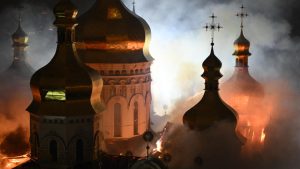
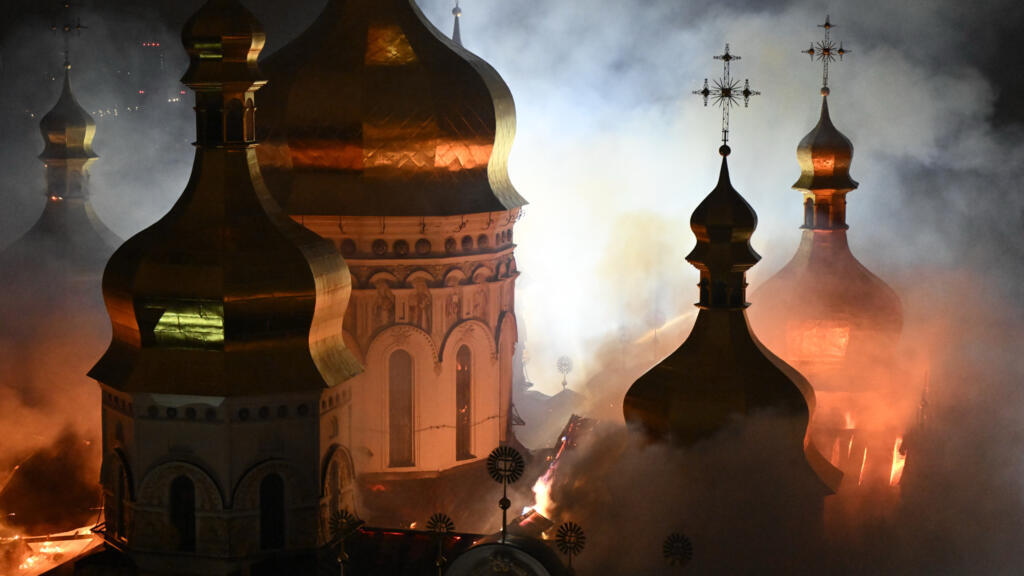
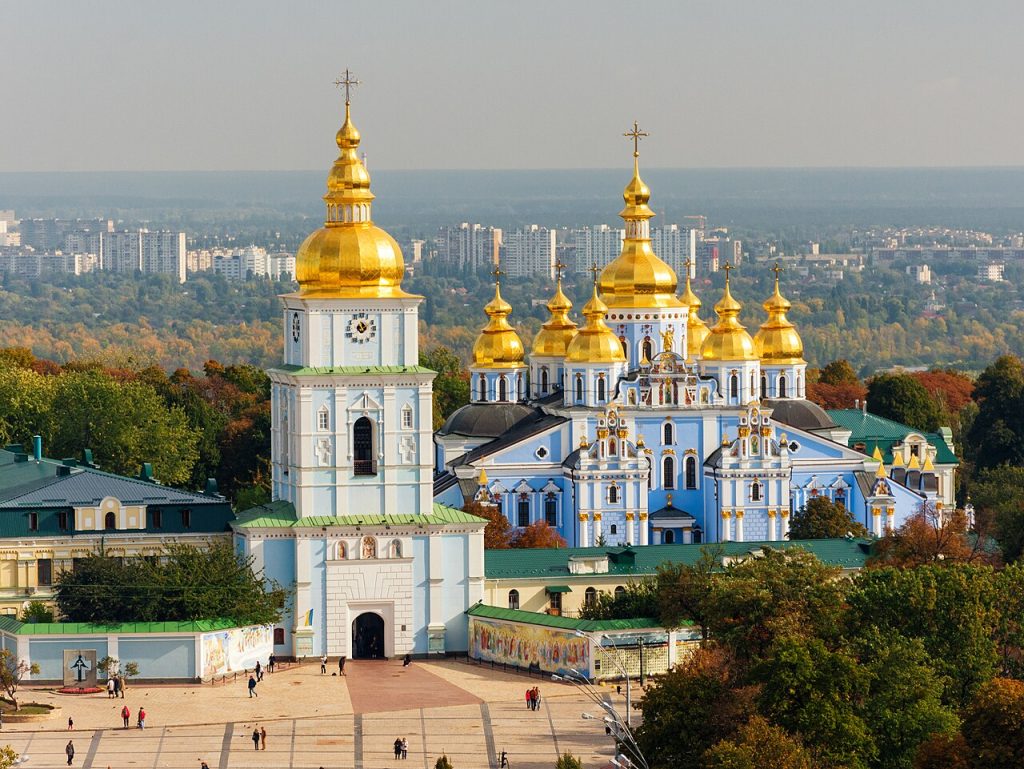
Image: St. Michael’s Golden-Domed Monastery and St. Sophia Cathedral, the largest religious complex in Kiev, Ukraine.