#Lebanon – The Lebanon war has triggered one of the fastest and most severe displacement crises in recent history. This displacement has primarily been made in the renewed conflict in March 2026 as the Israel Defense Forces (IDF) invaded Lebanese territory and has stated intent to occupy southern Lebanon as a “buffer zone”. The displacement in this conflict has affected approximately 1.2 million people, or about 20% of the total population of Lebanon, compounding the country’s pre-existing economic collapse, prior 2024 displacements, and hosting of approximately 1.5 million Syrian refugees from the next-door civil war.
Displacement surged after intensified exchanges beginning around March 2, with Israeli airstrikes, ground operations in the south, and widespread evacuation orders covering southern Lebanon (south of the Litani River), parts of the Bekaa Valley, and Beirut’s southern suburbs. IDF demands reportedly affected over 100 towns/villages and large swaths (up to ~14% of Lebanese territory). By mid-to-late March, figures hit 800k–1+ million; recent reports (as of early April) cite 1.2 million+ internally displaced persons. These numbers are on top of residual displacements from the 2024 phase (~1 million at peak, with tens of thousands still unable to return fully by early 2026 due to damage and security issues).
Thousands of displaced Christians from southern villages are included in the total numbers. Some initially stayed despite IDF demands to evacuate, citing commitments to their communities, but many left as army presence withdrew and strikes neared. They have marked Easter in shelters or away from ancestral churches, with reports of fear, siege-like conditions in some towns, and other strains. The IDF has also destroyed churches as well as historical holy sites since 2024. In November 2024, the IDF deliberately destroyed the Mausoleum of Simon the Pure in the village of Shamaa, near Tyre in southern Lebanon. This historical site to Lebanese Christians and Muslims is regarded as the tomb of Saint Peter (although Latin tradition places his burial in Rome where he was martyred).
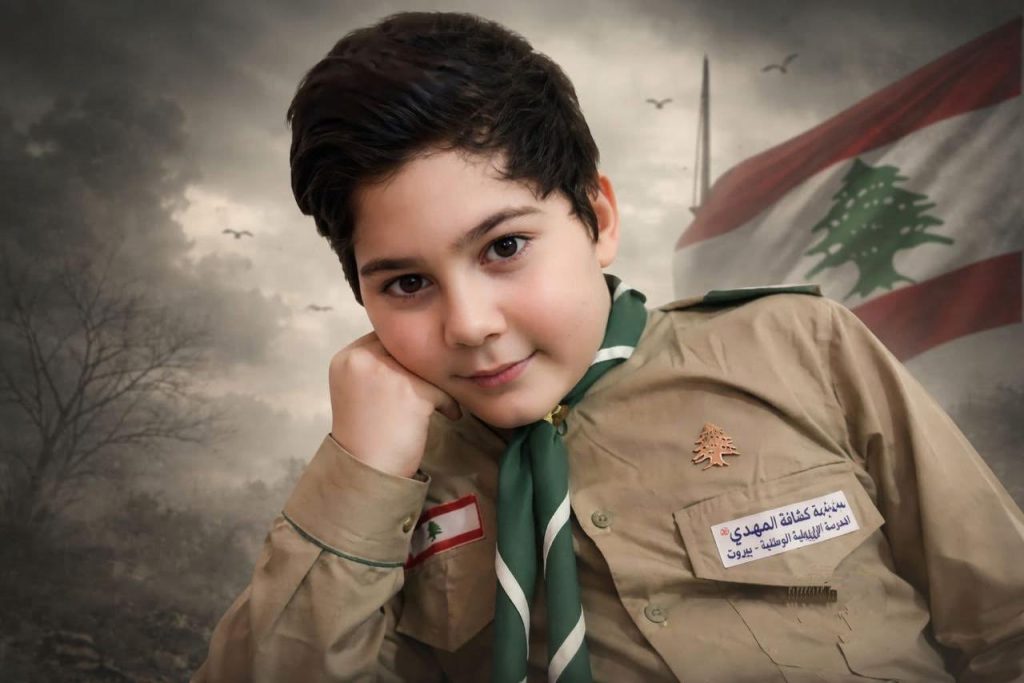
The invasion has also resulted in the deaths of countless civilians. In early March, a Maronite priest who refused to evacuate and decided to remain with his faithful in a Christian village was killed when IDF artillery fire hit his nearby position. The IDF did not apologize for the misfire and claimed that the event was an accident. As a result of major airstrikes in Beirut on April 8th, 2026, the IDF killed 300 people were killed, among them, found amid rubble was an Al-Mahdi boy scout named Jawad Ali Ahmad. In 2025, Jawad and other scouts were famously known for their enthusiasm over the visit of Pope Leo XIV to the country.
No precise, verified total exists for civilian (non-combatant) deaths in Lebanon from 2024-2026 due to the challenges of real-time distinction between combatants and civilians in ongoing conflict, politicization of figures, and incomplete independent verification. However, the renewed conflict from March 2nd to present has resulted in a spike of casualties. Lebanese Ministry of Health totals are approximately 1,953 killed and 6,303 injured. This total included breakdowns noting over 200 women and children (approximately 130 children and approximately 102 women).
Lebanese reports and UN/Amnesty/HRW describe a significant civilian toll, with strikes hitting residential areas, dense neighbourhoods, homes, health facilities, and non-military sites. Examples include family clusters, entire buildings, and incidents in Christian villages. In Ain Saadeh, a strike killed many civilians including an anti-Hezbollah politician and wife. Israeli strikes killed civilians such as 70-year-old Sami Ghafari in his garden, and others repairing infrastructure. Residents who stayed faced bombardment despite claims of neutrality. The United Nations has highlighted women, children, medics, and journalists among victims, with concerns over proportionality and civilian object strikes. A recent incident involving a RT News journalist Steve Sweeney nearly resulted in the death of himself and his crew when the IDF bombarded his position despite being promised from them that the area was safe. Likewise, in reporting on this event on Tucker Carlson’s talk show, Sweeney also described the deliberate IDF targeting of medical vehicles, hospitals, and critical infrastructure in Lebanon as both a journalist and long-time resident in Lebanon that has lived through the conflict. Israel reports high combatant kills (e.g., 1,400+ vs. internal counts of ~400+), claiming embedding in civilian areas, and has attributed civilian deaths to claims that radical groups shelter with civilians or otherwise deliberately shield themselves with civilians. Independent analyses, however, suggest 80%+ of some sampled deaths in civilian-heavy contexts. A realistic civilian range places likely hundreds to 1,000+ of the 2026 total, but are unverified precisely.
Christians in Lebanon form one of the largest and most diverse Christian communities in the Arab world, making up roughly 30–38% of the country’s population. With Lebanon’s total population around 5.5–6 million, this total equates to approximately 1.7–2.24 million Christians. These Christians include 12 recognized sects, the largest being the Maronites (about half), followed by Greek Orthodox, Melkites (Greek Catholics), Armenian Orthodox and Catholics, Syriacs, Chaldeans, Assyrians, and other smaller groups.
Christianity has deep roots in Lebanon, dating back to the 1st century AD and traditionally linked to figures like Saint Paul the Apostle. The region was a refuge for various Christian groups over centuries amid Byzantine, Arab, Crusader, Ottoman, and French influences. The Maronite Church, in full communion with Rome since the 12th century, became particularly prominent in the Mount Lebanon area.
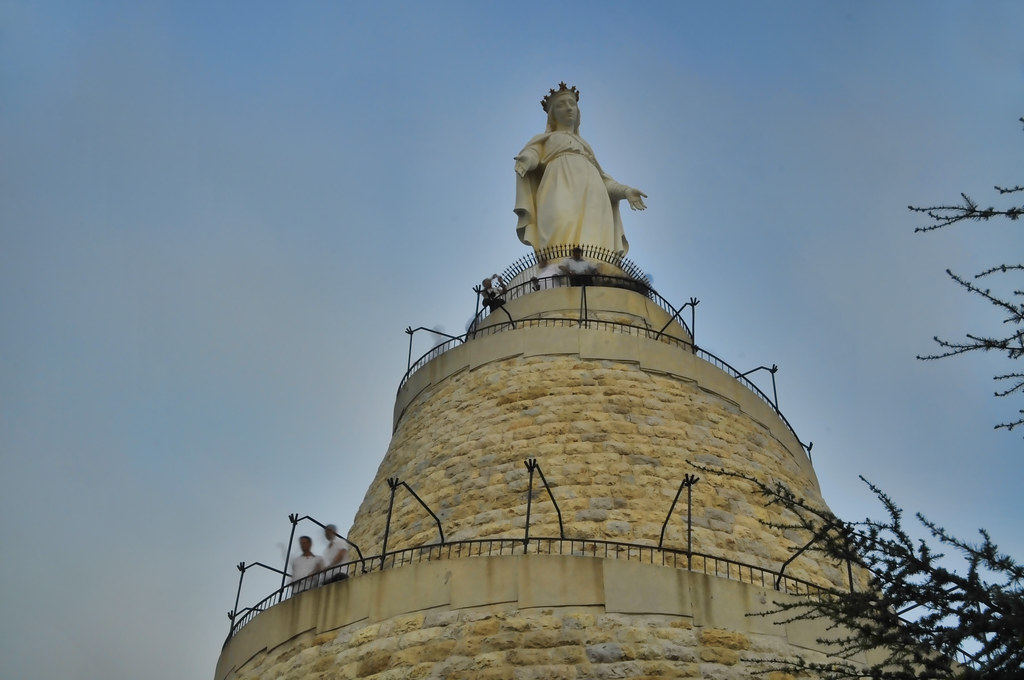
Despite pressures, Lebanese Christians maintain vibrant cultural, educational and religious life, with historic sites like the Shrine of Our Lady of Lebanon. Lebanese Christians are seen by many as key to preserving the country’s diversity and stability in a volatile region. They embody resilience amid repeated crises, but ongoing instability, economic woes, and conflict continue to test their future in the country they helped found.
At this time, a majority of displaced persons have found refuge with relatives, friends, host families, in informal settlements, cars, tents along Beirut’s coast, while smaller hundred-thousands in public spaces. A minority without these options have found refuge in government-designates sites in Beirut and Mount Lebanon. These public areas have become overcrowded though. At the same time, despite movement north and away from the frontline, IDF bombardment has also moved north and has hit Beirut. On April 8, 2026, Belgian Foreign Minister Maxime Prévot was present in Beirut during the major Israeli airstrike campaign, which struck just a few hundred meters from the Belgian embassy, where he and his delegation were located. If the Israeli invasion continues to move north, the conflict could result in further displacement and a refugee crisis comparable to the Syrian crisis in the last decade, if not worse.
Image: Our Lady of Lebanon, a Marian shrine and pilgrimage site in Harissa, Lebanon, completed in 1904.