#EU #France – The Macron government intends to replace the 19th century stained glass window of the Notre-Dame of Paris with a contemporary design by French artist Claire Tabouret.
Notre-Dame’s famous stained-glass windows largely survived the 2019 fire, though many were removed, decontaminated from lead dust, cleaned, and reinstalled as part of the broader restoration. The cathedral reopened in December 2024.
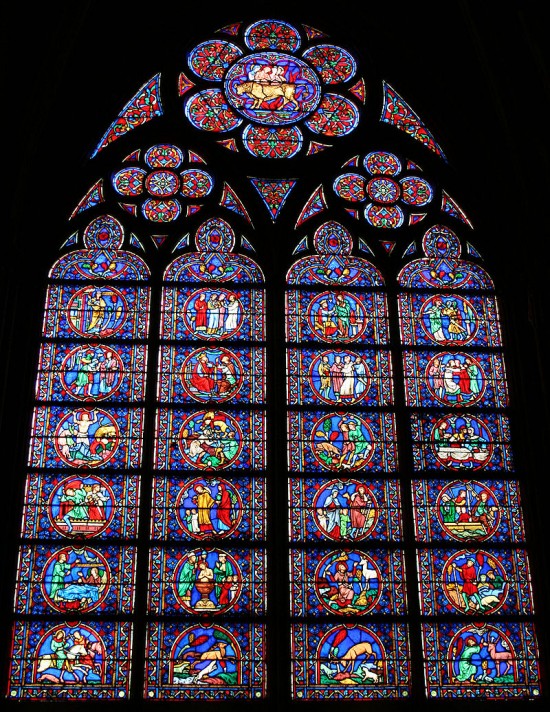
The windows in question are six grisaille (mostly monochrome, geometric) panels from the south aisle chapels of the nave. They were installed during Eugène Viollet-le-Duc’s 19th-century restoration and were not damaged in the fire.
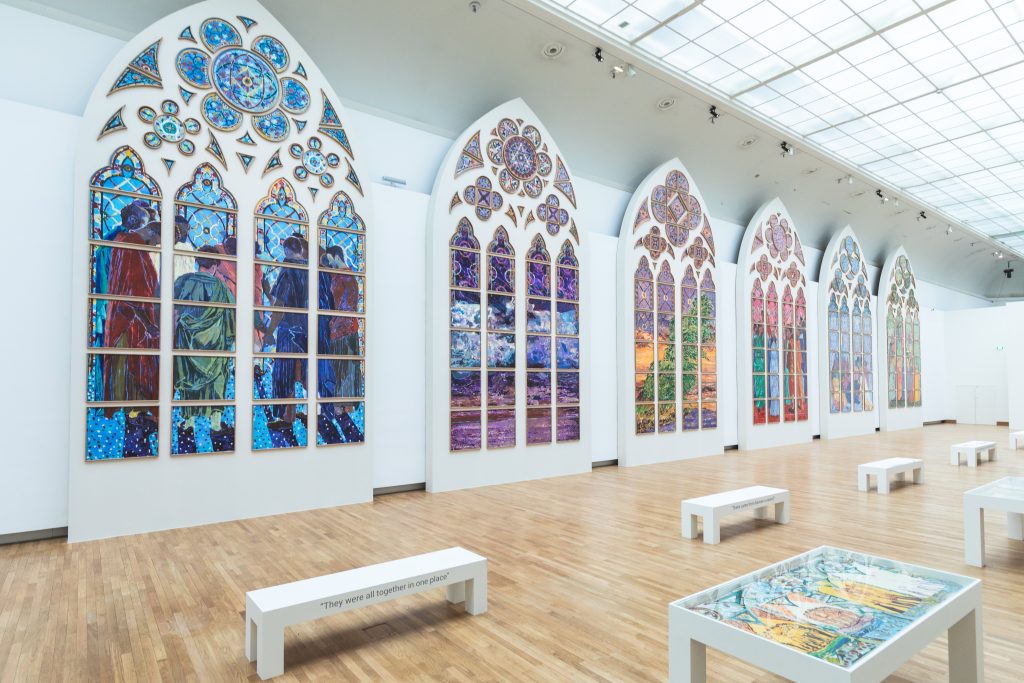
In 2023–2024, President Emmanuel Macron and the French Ministry of Culture launched a competition to install new stained-glass windows as a “contemporary mark” on the post-fire restoration. Artist Claire Tabouret (a figurative painter based in Los Angeles) was selected. Her designs, created with the historic Atelier Simon-Marq workshop in Reims, depict the Feast of Pentecost (the descent of the Holy Spirit on the apostles and Virgin Mary, from the Acts of the Apostles).
Although a Catholic cathedral, the French government owns the Notre-Dame of Paris outright, while the Catholic Church has exclusive rights to use it for worship. This arrangement authorizes the state to make decisions about structural changes, restorations, and modifications like the stained-glass windows.
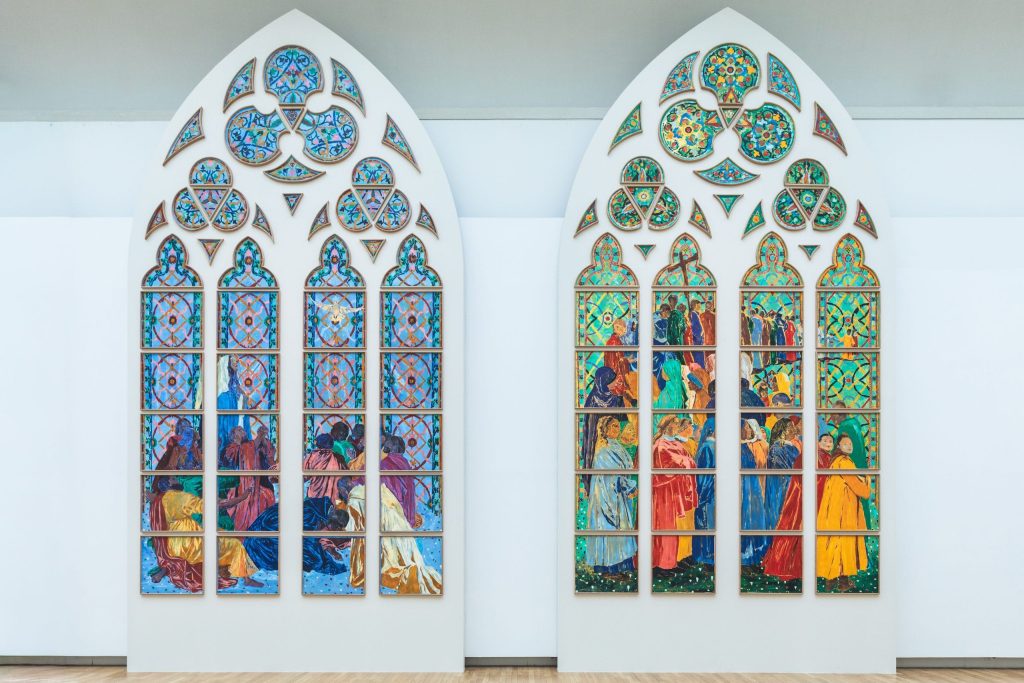
Full-scale models and preparatory works were exhibited at the Grand Palais in Paris from December 2025 to March 2026. The originals are expected to go to a museum. Installation of the new windows is targeted for late 2026.
Heritage groups, especially the association Sites & Monuments, strongly oppose the replacement. The key arguments state that the windows survived the fire intact and are protected historic elements. To replace these windows would violate heritage principles, e.g. the Venice Charter on preserving authentic fabric. At the same time, a petition has gathered over 300,000–330,000 signatures opposing the replacement.
Legal challenges have been filed and mostly rejected so far, but a new urgent appeal was announced after the work authorization was publicly posted in mid-April 2026.
Critics see the work as unnecessary “cultural desecration” or a presidential caprice, especially given costs (around €4 million) while other heritage needs exist. Supporters view it as a living continuation of the cathedral’s history of evolution and renewal.
As of late April 2026, the project is moving forward amid ongoing legal and public debate, with the new windows still scheduled for installation by the end of the year. This fits into Notre-Dame’s long tradition of changes over centuries, but it has reignited debates about authenticity vs. contemporary intervention in historic monuments.
Image: Notre-Dame of Paris in October 2017 prior to the fire.