#UK #England – Catholic Christians have now outnumbered Anglican Christians among Generation Z (“Gen Z”) demographics in the United Kingdom. The Telegraph published an article highlighting the recent trend, distinguishing a a notable revival in Catholicism in Britain, especially among younger generations. Although overall church attendance in the UK has declined for decades, Catholicism is bucking the trend with rising conversions, interest, and relative strength compared to Anglicanism. Younger people are drawn to the Catholic Church’s structure, clarity, discipline, mystery, and strong identity amid modern life’s chaos and lack of meaning.
According to a Bible Society report (titled “The Quiet Revival”), Catholics now outnumber Anglicans by more than 2:1 among regular churchgoers aged 18–34 (Gen Z and younger millennials). In the Diocese of Westminster (largest in England), at least 500 people were expected to be received into the Catholic Church this Easter, around half baptized as new Catholics, a decade-high figure. A similar surge was reported in Southwark (~450) and other dioceses.
The overall conversion trend has been more prominent among younger men than women even though historical numbers of practising Catholicism have been stronger in women rather than men. Catholic Mass attendance has remained more stable (around 1.75 million regular attendees in England and Wales) compared to sharp Anglican declines.
The explanations behind this upward trend has suggested that young people seek answers in a fragmented, uncertain world (political, economic, social). Archbishop Mark O’Toole of Cardiff has stated “they are looking for clarity and stability… attracted to the Catholic Church’s strong sense of identity and clarity around the teaching of Jesus.” Another reason could be an appeal of tradition, sacraments, community, and “full-fat” supernatural Christianity rather than diluted forms seen in Protestant denominations. Additionally, influences of online content, intellectual converts, and cultural figures (e.g., echoes of Tolkien or structured liturgy) have also suggested to be a factor in the increase of once a taboo denomination. For the most part, the trend has been lay-driven, with growth in interest particularly among young adults and men; not primarily “extremist or fundamentalist” but a search for depth.
The article contrasts this trend with long-term secularization and Anglican decline. It notes the revival is “quiet” and grassroots, raising questions about whether the institutional Church can fully respond. Similar trends are mentioned in related coverage for the US and globally. The author (Catherine Pepinster) presents this overall trend as a positive, extraordinary development driven by the faith’s enduring offerings in a post-modern world.
Catholicism in the UK has deep roots dating back to Roman Britain, with a complex history marked by early establishment, medieval flourishing, Reformation rupture, centuries of persecution, gradual emancipation, and modern revival. For observers and advocates, the rise of Catholicism in the United Kingdom marks an important revival of the faith to the domination religion of the nation for almost 1,500 years prior to the break up under Henry VIII to justify his divorce through the founding of the Church of England.
Since 2000, the Church of England has experienced a long-term decline in active participation, influence, and vitality over decades, despite recent modest post-COVID recovery and pockets of growth. Scholars and observers cite secularization, cultural shifts toward individualism, competition from other faiths/denominations, internal controversies (e.g., over sexuality, women bishops, liturgy), and failure to retain young people as key factors for their own decline. The Church retains significant cultural/institutional roles (e.g., in education, weddings, national ceremonies, and 26 bishops in the House of Lords), but active membership no longer reflects its historic dominance. Last Easter, the King of England was criticized for failing to provide an Easter address, which observers viewed as another sign of the decline of the Church of England since the king, as the supreme governor of the church, failed to engage with the faithful on the most important solemnity of the Christian calendar.
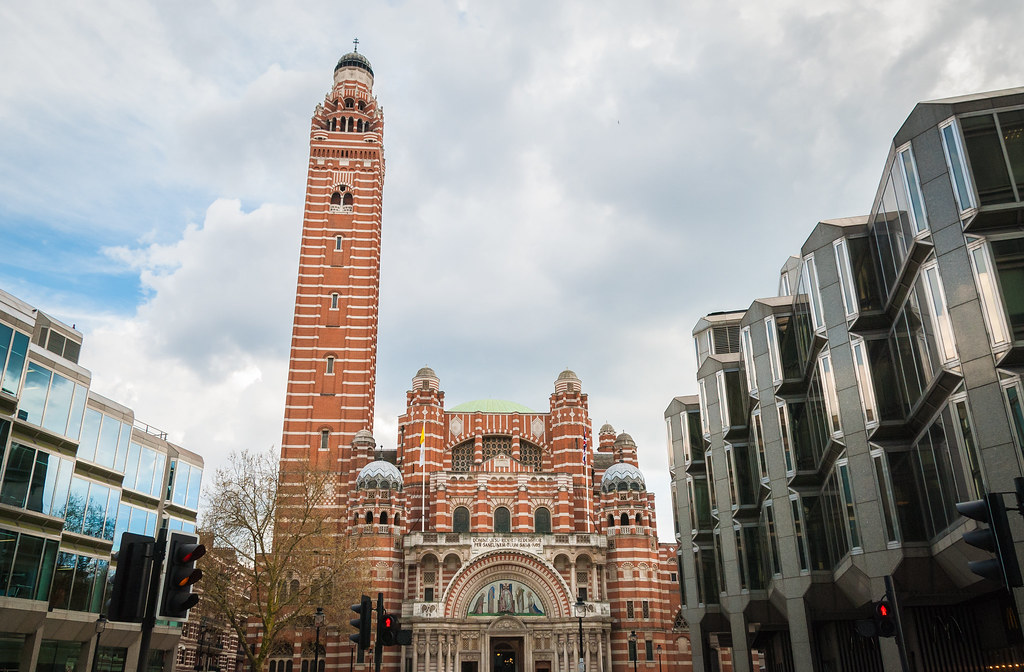
Image: Metropolitan Cathedral of the Most Precious Blood in London, England, the seat of the Catholic Archbishop of Westminster.