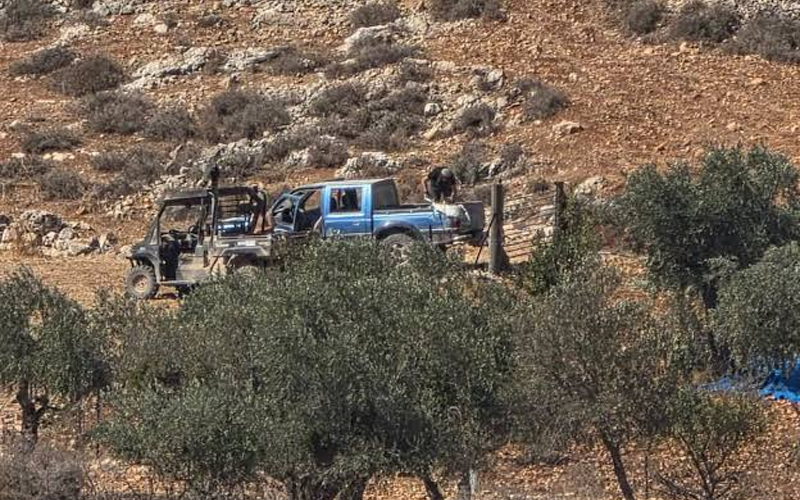
#HolyLand #Taybeh – Israeli settlers entered olive groves belonging to residents of the Christian village of Taybeh in early October 2026 and harvested fruit from the trees, local clergy and residents reported, even as Palestinian landowners said they were unable to safely reach their own property. The area remained under a military closure order that Israeli authorities had issued months earlier, citing the need to curb settler violence.
Taybeh, northeast of Ramallah, is widely regarded as the last remaining entirely Christian Palestinian village in the West Bank. Its residents have long relied on extensive olive groves—local estimates placed the planted area at more than 16,000 dunums—for income, oil production, and family tradition. In recent years the village had faced growing pressure from nearby settler outposts, including livestock grazing on private land, fires, and other incidents.
In August 2026, the Israel Defense Forces declared Taybeh and the neighboring village of Rammun a closed military zone for non-residents. Military officials said the measure targeted Israelis and foreigners, not Palestinian residents, and was intended to prevent attacks by settlers. A spokesperson stated that forces would respond to violations by dispersing gatherings and detaining suspects. Reuters reported the order at the time as a response to violent incidents by Israelis in the region.
As the olive harvest season began, Fr. Bashar Fawadleh, the Latin parish priest in Taybeh, described settlers moving through agricultural land east of the town beginning on the morning of October 4. He said they entered privately owned groves belonging to village residents and picked the olives while the area stayed under the prior military closure. “Landowners are afraid to reach their own olive groves, or are unable to do so safely, while others are able to enter the same land, move through it and harvest its fruit,” he stated in a message shared with Christian media outlets.
Further incidents were reported around October 5 and 7. Local sources described settlers harvesting olives east and south of the village, with some trees damaged by aggressive picking methods and sheep—believed to belong to settlers—grazing among the groves. Witnesses and local documentation cited the involvement of Neriya Ben Pazi, a settler previously sanctioned by the United States for violence against Palestinians (sanctions that were later lifted under the Trump administration). One report noted that olive-picking mats had been taken from a Taybeh resident’s property and used by settlers. Israeli police arrested three individuals in connection with activity at a farmhouse near the village, according to the priest’s account.
Residents and clergy framed the situation as a painful contradiction: the closed-zone order had been presented as a protective step, yet settlers continued to access the land while owners reported practical barriers stemming from fear of violence and the surrounding security environment. For many families, the harvest represented more than seasonal income; it sustained households and reinforced their connection to land passed down through generations. Local leaders warned that repeated difficulties over multiple seasons could leave families with insufficient oil for their own needs and increase pressure to leave.
Israeli military statements from the time of the August order emphasized enforcement against those who violated the restrictions and protection of local residents. Broader reporting on West Bank olive harvests in recent years has documented frequent friction, restricted access for Palestinian farmers, settler attacks, and the use of closed military zone orders amid security concerns. Palestinian sources and some human rights groups have criticized enforcement as uneven, while Israeli authorities have pointed to the need to manage tensions and prevent violence during the harvest period.
The events in Taybeh drew attention from Catholic and Christian organizations, which called for guarantees of safe access for landowners and accountability for those interfering with the harvest. The village, home to roughly 1,200–1,500 residents and known for its brewery, has seen emigration amid ongoing pressures, according to local accounts.
Cover Image: Numerous pictures and videos were captured in the past week that showed Israeli settlers stealing the harvest of Christian Palestinians in Taybeh.