#Canada #ON – The Canadian Armed Forces issued a formal policy on July 29, 2026, that replaced traditional religious prayers with neutral “spiritual reflections” at mandatory public military ceremonies, prohibiting references to God or other faith-specific language. The move expanded earlier guidance and drew sharp criticism from Christian groups, some chaplains, and opposition politicians who viewed it as an erosion of religious expression, while supporters praised it as a necessary step toward inclusivity.
Canadian Armed Forces Military Personnel Instruction (CAFMPI) 03/26, titled Spiritual Reflections in Military Settings, applied to all CAF members, Department of National Defence employees, contractors, and volunteers providing spiritual or religious services. It superseded a October 2023 Chaplain General directive and required that, where prayers or religious observances had previously been requested at official events, participants instead deliver inclusive reflections focused on lessons learned, values, gratitude, remembrance, hope, and integrity.
The policy covers graduation parades, change-of-command ceremonies, ship commissionings, awards presentations, mess dinners, and commemorations such as Remembrance Day, the Battle of Britain, and the Battle of the Atlantic. Spiritual reflections could not use religious-specific language, including references to God, and participants were directed to avoid faith-tradition symbols or actions while acting in an official capacity. Chaplains had already shifted to neutral scarves bearing the Royal Canadian Chaplain Service crest rather than symbols such as crosses.
Officials grounded the change in the 2015 Supreme Court of Canada ruling in Mouvement laïque québécois v. Saguenay (City), which affirmed the state’s duty of religious neutrality under the Canadian Charter of Rights and Freedoms. The instruction stated that the CAF recognized the growing diversity of its members, including those with no religious affiliation, and aimed to ensure everyone could participate without coercion. Private counselings, voluntary worship services, faith-specific gatherings, requested rites, and military funerals (guided by family wishes) remained unrestricted. Indigenous cultural practices were permitted for educational or reconciliation purposes.
The Royal Canadian Chaplain Service had evolved significantly over decades. Separate Roman Catholic and Protestant branches merged in 1995, and the service later expanded to include humanists, Jewish, Muslim, Buddhist, Sikh, Indigenous, and other chaplains. In May 2025, Colonel Lisa Pacarynuk became the first woman appointed Chaplain General.
Critics argued the policy effectively banned public prayer and privileged secular or non-theistic perspectives. Anonymous CAF members and chaplains told outlets they felt the change marked a major departure from tradition, particularly around commemorating the fallen, and described it as favoring atheism or certain Indigenous practices over monotheistic faiths. The Evangelical Fellowship of Canada expressed deep concern, saying the rules forbade chaplains from referring to God or the divine and required secular-style reflections regardless of the speaker’s beliefs. Conservative MPs, including Andrew Lawton and James Bezan, called it an attack on freedom of religion and expression.
Humanist groups welcomed the update. Humanist Canada and the British Columbia Humanist Association said it upheld Charter protections and allowed members of all worldviews to participate fully in ceremonies.
CAF statements emphasized that the policy did not limit personal beliefs or private practice and that members could still interpret reflections according to their own traditions or engage in silent personal prayer. The instruction directed commanders and chaplains to maintain neutrality in public duties while continuing to support spiritual well-being across the force.
The formalization of the rules, building on the 2023 interim measures, marked a notable shift in how the Canadian military conducted public spiritual elements of its ceremonies, reflecting broader debates over religion, neutrality, and diversity in Canadian public institutions.
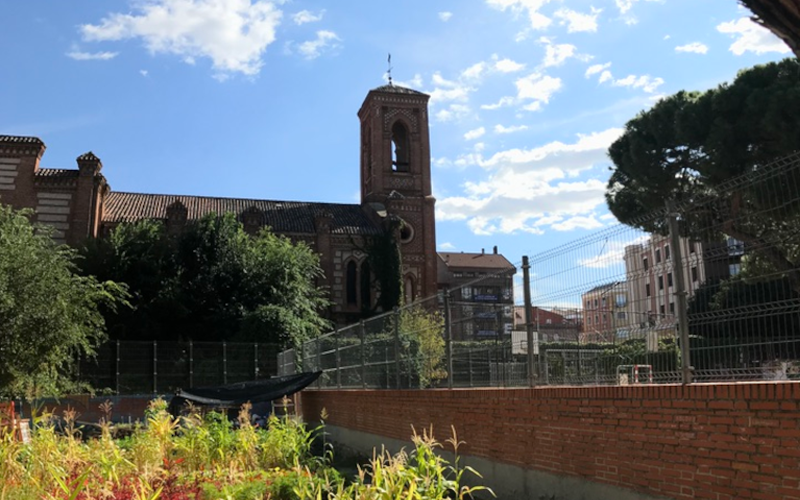
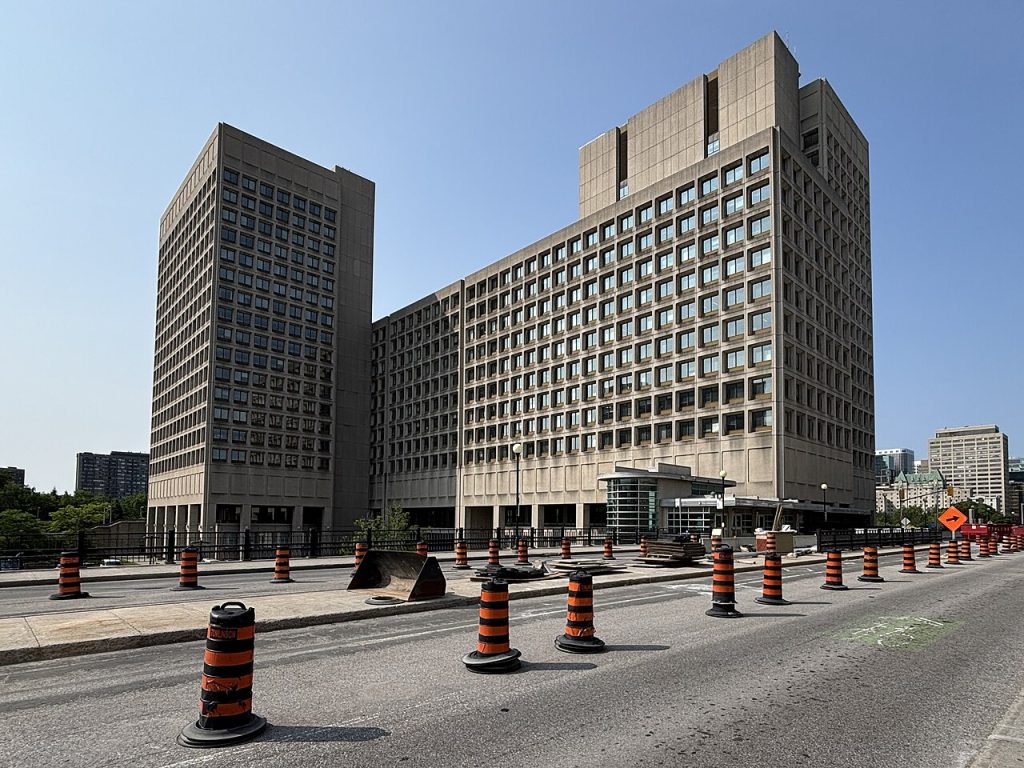
Image: Major-General George R. Pearkes Building, looking from Mackenzie King Bridge in 2025, the location of the Department of National Defence in Ottawa, Canada.