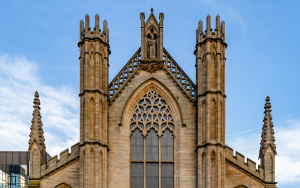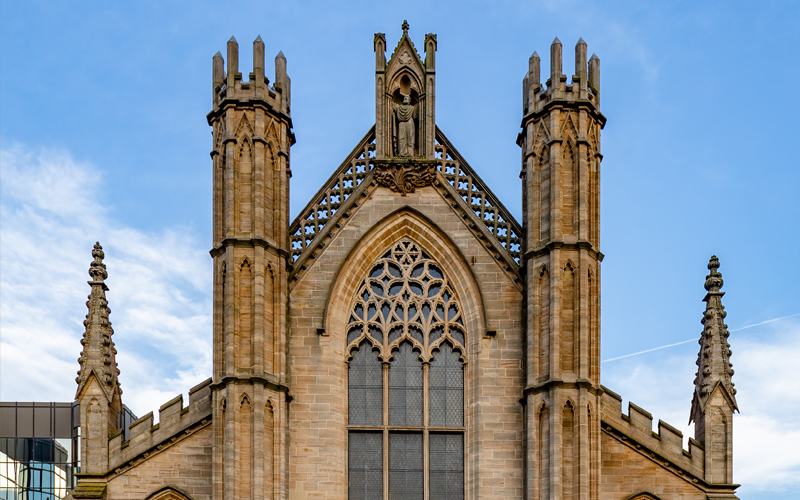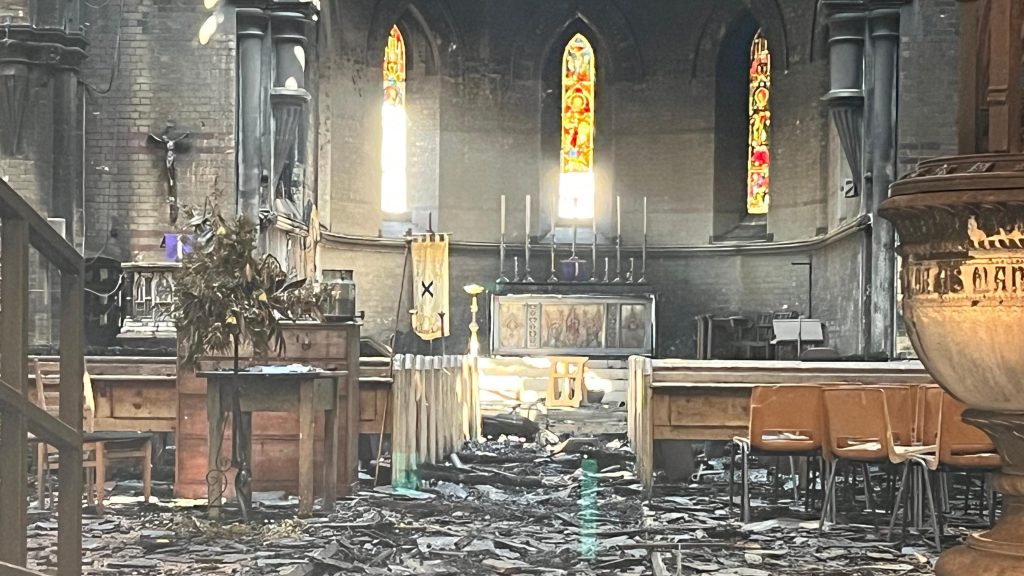
#UK #England – A major fire broke out on the ground floor of St Andrew’s Church on Jarrom Street in Leicester late on 28 July 2026, severely damaging the roof of the Victorian Gothic Revival building. Up to nine fire engines and around 60 firefighters from Leicestershire Fire and Rescue Service battled the blaze through the night into the early hours of 29 July.
Crews were mobilized at approximately 11:17pm after multiple calls. They found the fire already taking hold and requested additional resources, including aerial ladder platforms. The flames spread from the ground floor to the roof, leaving large sections destroyed and blackened timbers exposed. The church’s spire and distinctive rose window largely survived. No injuries were reported, and all persons were accounted for.
In a particularly sensitive operation, firefighters wearing breathing apparatus entered the building and rescued a coffin containing the body of a church warden. The coffin had been placed under the high altar overnight in preparation for a funeral the following day, following the traditional Reception of the Body practice observed by the Anglo-Catholic congregation. The funeral was later relocated, and the family was informed of alternative arrangements.
Leicestershire Fire and Rescue Service investigated and ruled the most probable cause accidental. The building had been secure at the time with no signs of forced entry. A spokesperson confirmed the findings to counter online speculation, including unfounded claims that the fire was deliberate. The parish priest, Father Johannes Arens, also stated that the fire was not intentional and expressed gratitude for support from across the community, including other religious groups. Police involvement was limited to assisting with road closures.
Designed by Sir George Gilbert Scott and consecrated in 1862, St Andrew’s had served the local area for more than 160 years. The Victorian Society highlighted its significance as a relatively unaltered example of Scott’s work, noting recent interior cleaning that had revealed polychrome brickwork and delicate stencilled patterns. Significant damage was reported particularly in the chapel of St John.
In the days that followed, church leaders emphasized resilience. Services resumed in the undamaged church hall, with the congregation declaring that “we are so much more than a building.” Volunteers cleaned the hall, and the site was secured with fencing due to falling slates. Fundraising efforts, including a GoFundMe campaign, were launched to support repairs to the cherished building that continued to serve its Anglo-Catholic community amid Leicester’s diverse population.
The Diocese of Leicester expressed deep sadness while thanking emergency services for their response. By the end of the week, the focus had shifted firmly toward recovery and the long-term restoration of the historic site.
Image: the interior of St. Andrew’s Church in the aftermath of the fire.