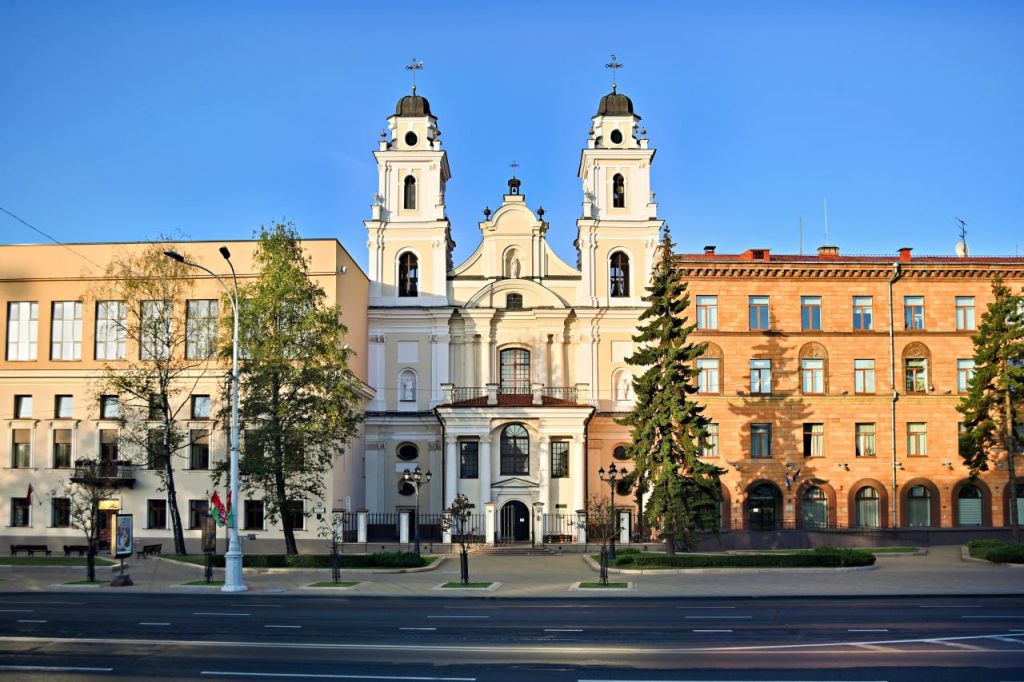
#Belarus #Minsk – Archbishop Iosif Staneuski of Minsk-Mohilev, president of the Belarusian Catholic bishops’ conference, highlighted a growing shortage of Catholic priests that threatened pastoral care across the country, particularly in its eastern dioceses.
In an interview with Vatican News’ Belarusian service published on May 28, Archbishop Staneuski described how declining clergy numbers made it increasingly difficult for the Church to serve its faithful. He noted that in the Mogilev region, one priest often covered multiple distant parishes, travelling hundreds of kilometers to minister to scattered communities.
The archbishop, who visited Rome to attend the plenary assembly of the Italian bishops’ conference from May 25-28, said the shortage also forced the postponement of plans to establish a Belarusian Catholic pastoral center in Rome, known as the Belarusicum. With clergy urgently needed at home, the Church could not spare priests to oversee the proposed hub in a Roman parish.
Many of Belarus’ Catholic priests have ethnic Polish roots and came from Poland in the decades following the collapse of communism, helping revive the Church. Catholics make up an estimated 6% or more of Belarus’s roughly 9.5 million people, with the Latin rite predominant. However, tensions between Belarus and Poland escalated after the disputed 2020 presidential election and Belarus’s role in Russia’s 2022 invasion of Ukraine. As a result, Belarusian authorities increasingly denied residency extensions to Polish priests, viewing them with suspicion.
Recent months saw several Polish priests forced to leave, including cases in the Vitebsk and Minsk-Mohilev dioceses, exacerbating the shortfall of experienced clergy.
Staneuski stressed the need to cultivate local vocations for long-term self-sufficiency. He appealed to families to foster priestly callings, describing the Church as “a family of families.” While he acknowledged the theoretical possibility of welcoming priests from Africa and Asia to help fill gaps, he emphasized cultural and linguistic challenges, alongside state vetting requirements.
Public statistics through 2022-2023 showed overall growth in priests since the early 2000s as the Church recovered from Soviet-era repression. However, disparities persisted: the western Grodno diocese remained relatively well-supplied, while eastern areas like Minsk-Mohilev, Vitebsk, and Pinsk faced acute shortages, with Minsk-Mohilev reporting the worst priest-to-Catholic ratio given its large geographic size.
The Belarusian Greek Catholic Church (also known as the Belarusian Byzantine Catholic Church) — has been effectively suppressed through the revocation of all legal recognition in 2026. This small sui iuris Eastern Catholic Church, in full communion with Rome and following the Byzantine Rite in Church Slavonic and Belarusian, traces its roots to the Union of Brest in 1596. Historically dominant (with up to 80% of Belarusians as Greek Catholics in the late 18th century), it faced multiple prior suppressions: by the Russian Empire in 1839 (forcibly integrated into the Russian Orthodox Church) and under Soviet rule after 1939.
Under President Alexander Lukashenko, a July 2024 religion law mandated re-registration of all religious groups for tighter state control, framed as protection against “extremism” and threats to national sovereignty. In 2025, authorities in the Brest Region rejected re-registration for Greek Catholic parishes without providing specific reasons.
On April 9, 2026, Belarus’s Supreme Court rejected the final appeal from the Parish of the Brothers Apostles Saints Peter and Andrew in Brest, upholding the liquidation of all three remaining registered Greek Catholic parishes in the Brest Region. This eliminated the last legally recognized communities nationwide.
Lukashenko has demonstrated favoritism toward the Russian Orthodox Church (Moscow Patriarchate) and held suspicion of groups seen as Western-oriented, Polish-influenced, or promoting Belarusian national identity. The Greek Catholic Church fits all these categories: it is in communion with Rome, uses the Belarusian language in liturgy, and maintains a distinct Eastern Catholic identity.
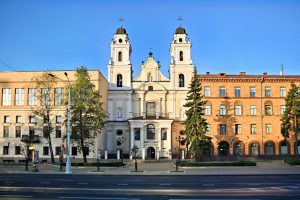
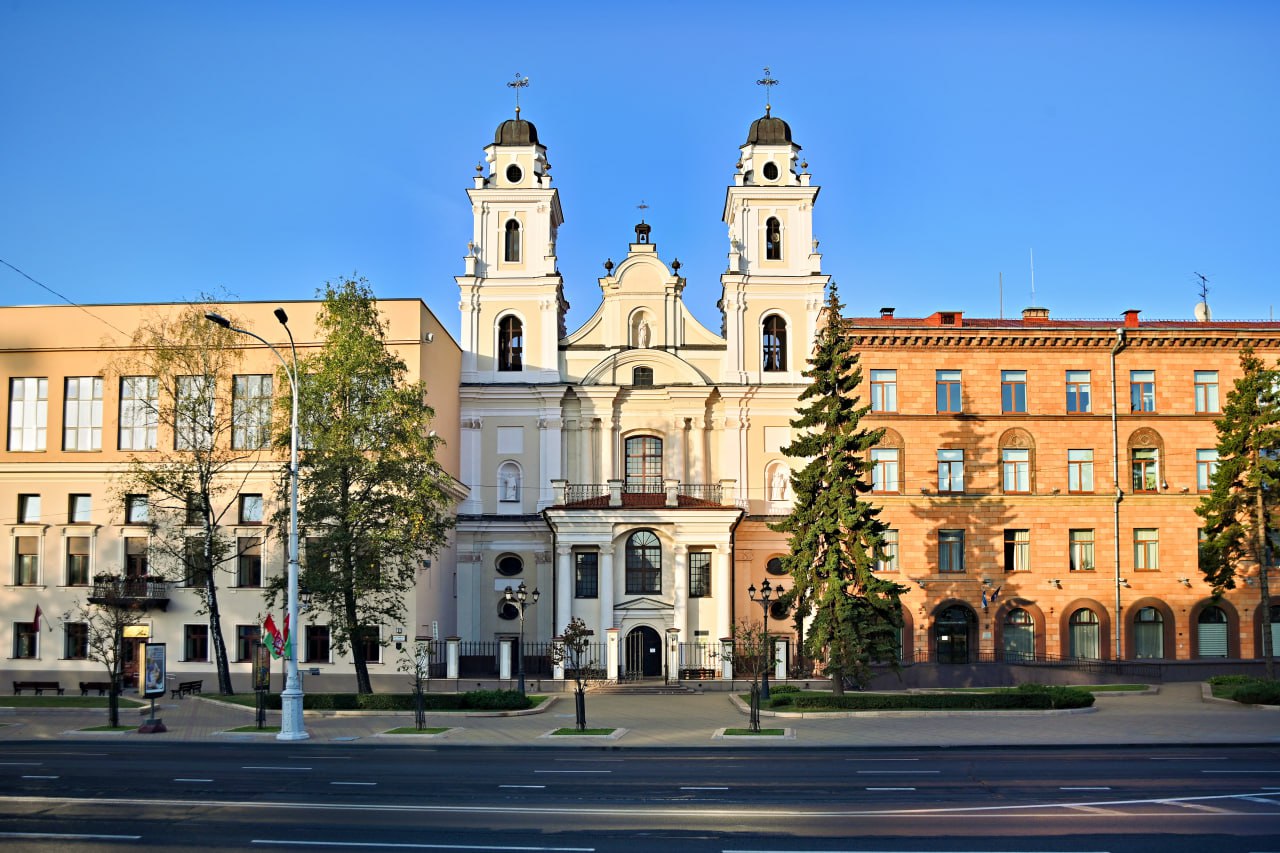
Image: Cathedral of the Holy Name of Saint Virgin Mary in Minsk, the seat of the Archbishop of Minsk-Mohilev.