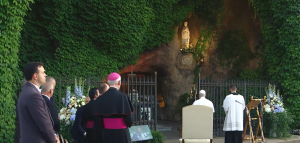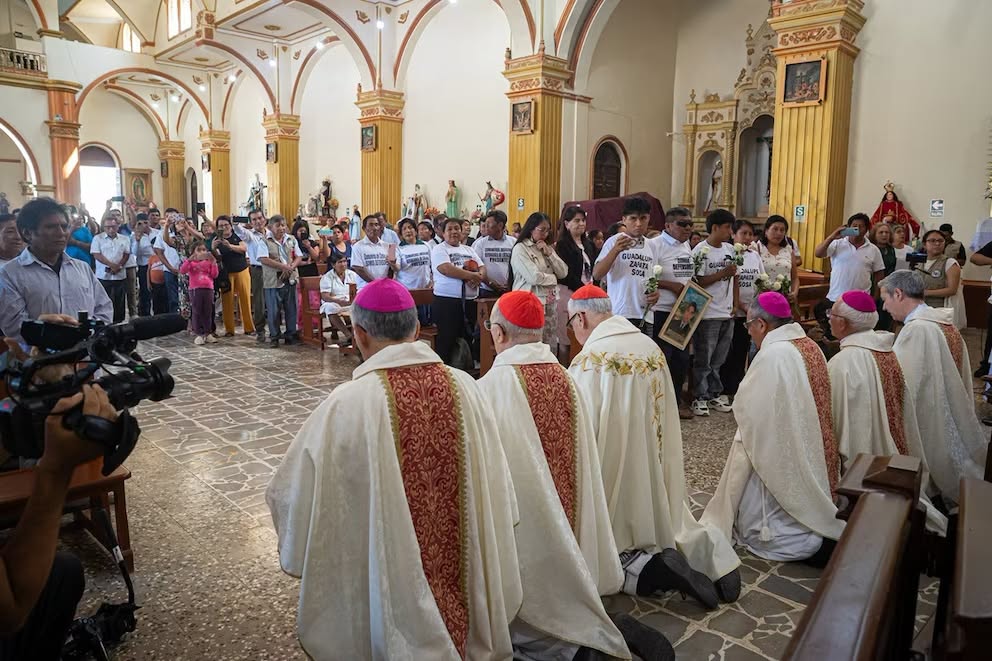
#Peru #Piura – On May 23, 2026, cardinals, bishops, and Vatican delegates knelt before indigenous Tallán farmers in a powerful Mass of reparation at the Church of St. John the Baptist in Catacaos, in Peru’s northwestern Piura region. They asked forgiveness for the suffering inflicted by the now-suppressed Sodalitium Christianae Vitae (SCV), also known as Sodalicio, a lay movement linked to decades of abuse, land dispossession, and harassment.
The solemn liturgy, held on the eve of Pentecost, served as a public act of accountability and symbolic compensation. Church leaders gathered with campesinos (peasant farmers) from the Tallán indigenous community, many of whom held white flowers. Relatives of slain indigenous leaders, including Guadalupe Zapata Sosa and Cristino Melchor Flores, also attended.
Cardinal Carlos Castillo Mattasoglio of Lima, Cardinal Pedro Barreto Jimeno (archbishop emeritus of Huancayo), Archbishop Luciano Maza of Piura, Archbishop Alfredo Vizcarra of Trujillo, and Spanish Msgr. Jordi Bertomeu — the apostolic commissioner overseeing the Sodalitium’s dissolution — concelebrated the Mass. They prostrated themselves before the altar in a gesture of humility and reconciliation.
“We should have come twenty years ago; today we ask forgiveness,” Msgr. Bertomeu told the assembly. “We ask for forgiveness because we haven’t always been on the right side. And please help us restore our Church.”
Cardinal Castillo acknowledged the delay in the Church’s response, stating, “More than 15 years have passed since the terrible experience you lived through… We must not forget, but we need to know how to remember in order to correct, above all, correct people who think they are gods.” He described the event as the start of a “process of repair and regeneration” and urged continued pursuit of justice and peace.
The Sodalitium Christianae Vitae, founded in 1971 by Luis Fernando Figari, grew into an influential movement across Latin America. However, it faced long-standing accusations of sexual, psychological, and spiritual abuse of members, as well as ties to companies that allegedly dispossessed indigenous farmers of their ancestral lands through threats, criminalization, harassment, and violence.
Journalists Pedro Salinas and Paola Ugaz brought renewed attention to the scandals in 2015 with their book Mitad Monjes, Mitad Soldados (“Half Monks, Half Soldiers”). An internal 2017 investigation confirmed abuses by Figari and other leaders against minors and adults. Vatican investigators, including Archbishop Charles Scicluna and Msgr. Bertomeu, visited Peru in 2023, meeting victims and affected communities.
Farmers reported that Sodalitium-associated entities seized communal lands, leading to the killing of at least two indigenous leaders and the prosecution of dozens of peasants who resisted. Pope Francis publicly supported the farmers in a 2024 video message, urging them to defend their land.
Following a formal investigation ordered in 2023, Pope Francis suppressed the Sodalitium Christianae Vitae and its affiliated groups in early 2025, citing confirmed abuses and a lack of authentic charism. The dissolution marked one of his final major acts before his death.
Peruvian bishops described the Mass as a sign of the Church’s commitment to justice, healing, and accompaniment. It aligned with the supportive tone expected for a potential visit by Pope Leo XIV to Peru later in 2026.
Cardinal Castillo emphasized renewal under Popes Francis and Leo XIV, calling for solidarity with popular movements and a “path of reconciliation.” He thanked the farmers for helping restore the Church’s credibility.
The event represented a late but significant acknowledgement of the Church’s failures. Church officials expressed hope that it would foster genuine repair for the affected communities while strengthening efforts to prevent future abuses.
Image: The moment in the Reparation Mass in which Church leaders knelt before the survivors in the congregation.