#Film #Culture – Greta Gerwig’s long-awaited Netflix adaptation of C.S. Lewis’s The Chronicles of Narnia drew sharp criticism and public debate after the director confirmed major creative choices for the first film, Narnia: The Magician’s Nephew. The project, which shifted the story’s Earth setting to the 1950s and cast Meryl Streep to voice Aslan, prompted questions about how closely it would follow Lewis’s Christian framework, which is integral to the story. Previous speculation on the project believed that Gerwig would not honor Lewis’ memory and attempt to divert the story to promote modern themes, perhaps even anti-Christian messages.
The film, written and directed by Greta Gerwig, adapted the chronological first book in the series rather than beginning with the more familiar The Lion, the Witch and the Wardrobe. Netflix scheduled a wide theatrical release for February 12, 2027, with a streaming premiere on April 2. Additional cast members included Emma Mackey as Jadis, Carey Mulligan, and Daniel Craig, along with young actors in the roles of Digory and Polly.
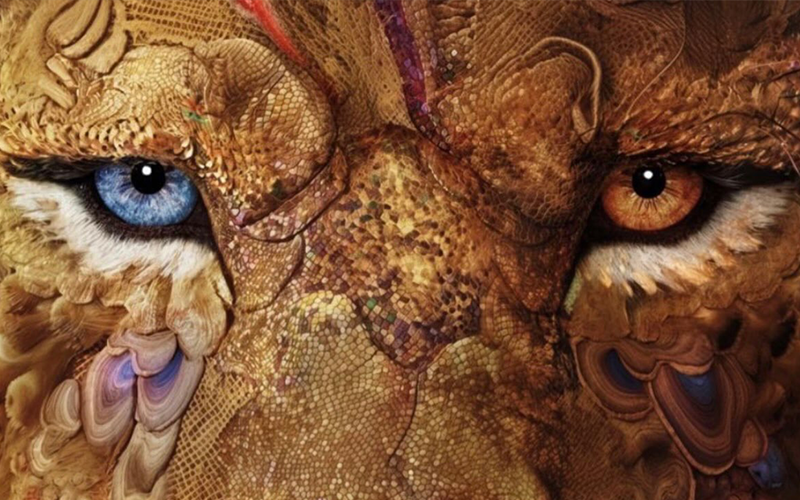
In a cover story for Empire magazine published in mid-September 2026, Gerwig confirmed that Streep would voice Aslan. She described the casting decision in terms of seeking an actor who could convey depth, pathos, joy, and “fresh wonder” without pretension or self-seriousness, noting that she wanted someone older than 70 and among the greatest performers available. Empire referred to the character as “he,” and Netflix indicated the announcement stood as given, so the lion remained male on screen. The first-look images showed Aslan with heterochromic eyes and a red facial stripe, details Gerwig linked to the appearance of David Bowie.
Gerwig also outlined the film’s overall tone. She said she had wanted a “rock opera” that felt big and transporting, drawing inspiration from 1960s and 1970s British rock musicians including Bowie, Paul McCartney, members of The Who, and Led Zeppelin. She connected the approach to the book’s creation sequence, stating that Narnia was “literally a world made out of music” sung into existence by Aslan and that rock ’n’ roll felt like a world made out of music to her. Production images suggested a colorful, glam-influenced visual style distinct from earlier screen versions of the stories. The adaptation relocated the London scenes from the early 1900s of the novel to post-World War II Britain, a change that would affect the timeline of any sequels.
These choices fueled discussion among fans and critics about fidelity to Lewis’s work. Lewis had described the series as a “supposal”—an imaginative exploration of what the Son of God might be like if incarnate in a world like Narnia—rather than a strict one-to-one allegory, while making clear that Aslan represented the creator and redeemer of that world, Jesus Christ. Some Christian commentators and readers argued that a female voice for the Christ figure, combined with the Bowie-inspired design and rock aesthetic, risked diluting or altering the theological core that had defined the books for generations. Petitions and opinion pieces called for greater fidelity, while supporters noted that previous adaptations had also downplayed explicit religious elements in promotion.
Netflix executives had earlier described the project as “rooted in faith,” similar to Lewis’s original material, and had pointed to Gerwig’s Christian upbringing as a relevant background. In early October 2026, the families of Lewis’s stepsons, David and Douglas Gresham, issued a statement through Netflix. They said they had personally witnessed Gerwig’s sincere passion for the series and her lifelong love of Lewis during conversations and a set visit in London, and that they were thrilled to work with her and the production team while hoping for success across future installments. The statement followed earlier claims by Movieguide founder Ted Baehr that family members had expressed concern about the Streep casting and its potential effect on the brand. The C.S. Lewis Company also offered positive remarks about Gerwig’s engagement with the material. Family representatives noted at the time that they had not yet seen footage or heard audio from the film.
Many online commentators compared Meryl Streep’s voicing of Aslan in Netflix’s Narnia reboot to the false god and anti-Christ character Tashlan from C.S. Lewis’s The Last Battle. They argued that a female voice for the canonically male Christ-figure—paired with a stylized design featuring heterochromic eyes and a red facial stripe inspired by David Bowie—produced a counterfeit version of Lewis’s character.
In The Last Battle, the ape Shift deceives Narnia’s talking animals by dressing a donkey named Puzzle in a lion skin and presenting the figure as Aslan. Shift then merges this impostor with the Calormene demon-god Tash, inventing the syncretic false god “Tashlan.” The deception spreads apostasy and helps bring about Narnia’s end. Critics applied the same framework to the Netflix project. The Christian Post reported that some social-media users assigned the name Tashlan directly to Streep’s Aslan. Others coined “Translan” or “Traslan,” portraying Gerwig as a modern Shift who packaged a hybridized figure for a new audience.
Commentators such as Isabel Brown contended that Lewis intended Aslan as the form in which Christ would appear in a world of talking animals, not a flexible symbol open to gender revision. They cited Lewis’s own statements linking Aslan to the Incarnation and noted Gerwig’s earlier remarks that she found language about Jesus as “Lord and Savior” uncomfortable and “God the Father” somewhat alienating. Production materials continued to refer to the character as male, and Gerwig described her choice of Streep as driven by the actress’s capacity for profound gravitas mixed with wonder rather than any announced gender change.
The analogy framed the casting and design as an act of substitution that, in the critics’ view, replaced Lewis’s Christ-figure with a more palatable modern alternative. The film remained scheduled for theatrical release in February 2027.
Cover Image: Promotional artwork featured on the Empire magazine that depicts the Gerwig’s Aslan with different colored eyes and a red stripe.