#USA #MO – The Archdiocese of St. Louis is suing the Trump administration and local jail officials, alleging that immigration detainees at a Missouri facility had been denied private confession, Communion, and other Catholic sacraments.
The lawsuit, filed in the U.S. District Court for the Eastern District of Missouri, named the archdiocese, Archbishop Mitchell Rozanski, and Father Chris Schroeder as plaintiffs. Defendants included Ste. Genevieve County Sheriff Gary Stolzer and other jail officials, Department of Homeland Security Secretary Markwayne Mullin, and acting Immigration and Customs Enforcement Director David Venturella.
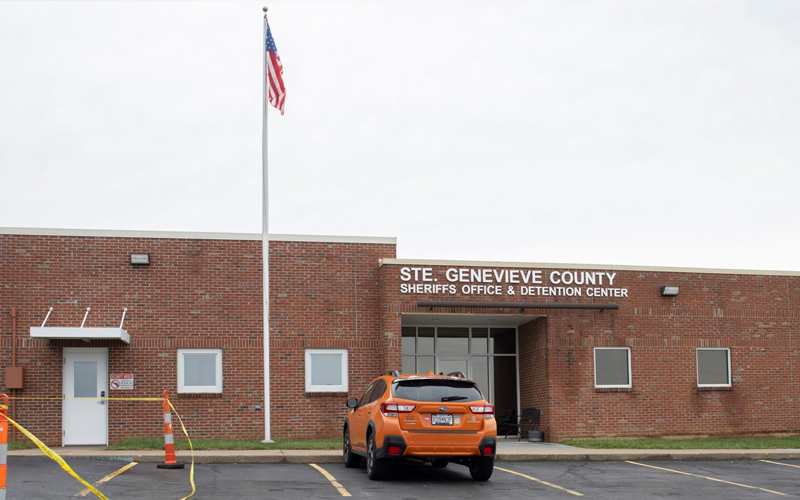
The complaint centered on the Ste. Genevieve County Detention Center, a county jail that held immigration detainees under contract with ICE. The archdiocese said roughly 150 people were detained there and that most were Roman Catholics. Priests from the archdiocese and religious orders had been visiting detainees who requested spiritual care, but the jail limited clergy to a short weekly window and required them to speak through a glass partition on telephone handsets that staff could monitor.
That arrangement, the archdiocese argued, made several sacraments impossible. Catholic canon law requires confession to be heard in person and in private. A conversation over a monitored jail phone would break the seal of confession, an offense that can bring excommunication. The filing also said priests could not celebrate Mass or anoint the sick. When clergy asked for contact visits so they could distribute Communion, jail officials proposed placing consecrated hosts in a container or plastic bag for a guard to pass to the detainee. Archbishop Rozanski called that proposal sacrilegious. The archdiocese said Communion may be administered only by an authorized minister and that the real presence of Christ in the Eucharist imposes strict rules on how it is handled.
The suit contended that the policy amounted to a ban on the sacraments and sought access comparable to that given to lawyers and consular officials. It cited the First Amendment’s Free Exercise Clause, the Religious Land Use and Institutionalized Persons Act, and Missouri’s religious-freedom law, and it asked for a preliminary injunction. The archdiocese also said ICE’s own guidance allowed clergy visits after notice to the sheriff’s office and that the agency had failed to enforce that policy. In a statement, the archdiocese said offering and receiving the sacraments was a central tenet of the faith and that the deprivation imposed immediate harm on both detainees and priests.
A Department of Homeland Security spokesperson denied the allegations the next day. The agency said the claims were false, that the site was a non-contact county jail rather than an ICE facility, and that detainees were allowed to practice their religion. DHS said religious items were permitted on request and that detainees were accommodated with religious services, including access to Catholic priests, the Eucharist, and the Sacrament of Penance when requested. The department added that county restrictions on physical contact did not mean religious services had been denied.
The case appears to be the first in which a U.S. Catholic diocese itself had sued ICE over pastoral access to immigration detainees. A related 2025 lawsuit over access at a facility near Chicago had been brought by an independent Catholic coalition and individual clergy, not by the Archdiocese of Chicago.
Cover Image: Ste. Genevieve County Detention Centre.