#USA #DC – The U.S. Supreme Court agreed Thursday to hear a religious-liberty dispute from northern Kentucky over a Catholic group’s plan to build a Marian shrine beside its church.
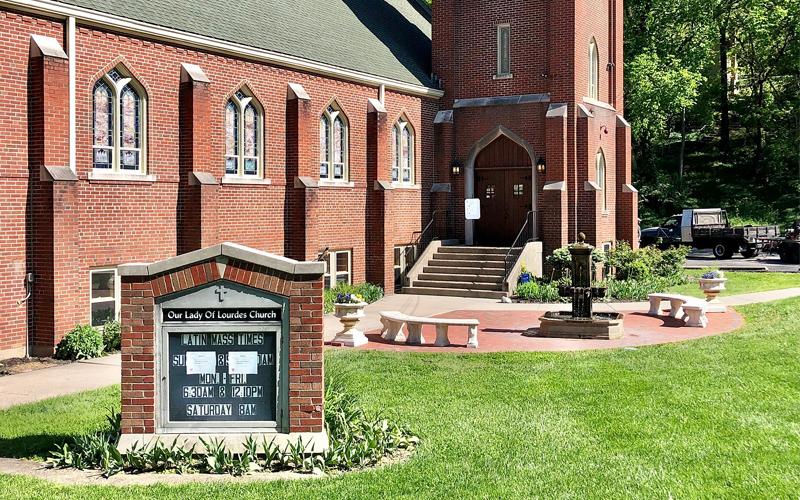
The justices granted review in a case brought by the Missionaries of St. John the Baptist, a nonprofit that owns the Our Lady of Lourdes property in Park Hills, a Cincinnati suburb. The group had sought permission in 2021 to construct a modest outdoor grotto honoring the Virgin Mary’s apparition at Lourdes, France. Plans called for a shrine, plaza, walking path, and retaining wall, roughly 16 by 39 feet, on a residential-zoned parcel next to the existing church and parking lot.
The Park Hills Board of Adjustment approved a conditional-use permit and setback variances. Neighbors objected, citing traffic and parking concerns, and a household across from the church sued. A trial court upheld the board’s decision, but the Kentucky Court of Appeals reversed, finding that the board had exceeded its authority and that federal law did not require the project to go forward. In December 2025, the Kentucky Supreme Court affirmed that result under the Religious Land Use and Institutionalized Persons Act, known as RLUIPA. The state court held that the denial did not impose a “substantial burden” on religious exercise and did not violate the statute’s equal-terms provision.
The missionaries petitioned the U.S. Supreme Court in March 2026, represented by the First Liberty Institute and other counsel. They argued that blocking a religious structure on property tied to their church conflicted with RLUIPA and with decisions in other courts. Kentucky Attorney General Russell Coleman and attorneys general from other states urged the justices to take the case.
The Court agreed to hear one question: whether prohibiting a religious institution from building a religious structure on its own property constitutes a substantial burden on religious exercise under RLUIPA. It declined to review a separate equal-terms claim. Oral argument had not been scheduled as of the grant; advocates said the case could be heard as early as January 2027, with a decision possible by the end of the term.
Church lawyers said the dispute could shape how zoning rules interact with federal religious-land-use protections nationwide. The objecting neighbors maintained that ordinary limits on traffic and land use had been properly applied and that RLUIPA did not compel an exception.
Cover Image: Our Lady of Lourdes property in Park Hills.