#India – In March 2026, India’s government introduced the Foreign Contribution (Regulation) Amendment Bill in the Lok Sabha, proposing expanded authority for a designated official to assume control of assets built with overseas donations when an organization’s FCRA registration was suspended, cancelled, or allowed to lapse. The measure sparked widespread alarm among Christian leaders and institutions, who warned it could lead to the effective seizure of schools, hospitals, churches, and ministry properties that had relied on foreign contributions for decades.
The bill, tabled on March 25, 2026, by the Ministry of Home Affairs, created a “designated authority” with civil-court-like powers. Under its provisions, the authority could take provisional custody of foreign-funded assets and, if registration was not restored, allow permanent vesting, transfer to government bodies, or sale with proceeds directed to the Consolidated Fund of India. Critics, including the Catholic Bishops’ Conference of India and the Evangelical Fellowship of India, described the changes as a significant escalation beyond previous restrictions on foreign funding. They noted that thousands of Christian-linked organizations had already lost or failed to renew FCRA licenses in prior years, raising fears that technical or administrative lapses could result in the loss of long-established facilities.
Opposition parties raised an uproar when the bill first appeared, leading to its deferral. By the monsoon session of Parliament in mid-2026, it remained listed for consideration. Church groups organized days of prayer and issued public statements calling the clauses “dangerous and alarming,” arguing they granted the executive sweeping powers over properties developed through charitable work serving marginalized communities.
Government officials rejected claims of targeted action against religious minorities. In July 2026, the Press Information Bureau released clarifications stating that the designated authority would manage only assets created from foreign contributions after lawful cessation of registration, that vesting began as provisional with possible restoration upon renewal, and that places of worship would retain their religious character in all cases. Orders of the authority remained subject to revision and appeal before a district judge. Home Minister Amit Shah met with Catholic bishops and assured them the legislation was not directed at Christian NGOs, which accounted for under 15 percent of total foreign donations received in India.
The debate unfolded against the backdrop of Christianity’s long presence on the subcontinent. According to the tradition of the Saint Thomas Christians of Kerala, the Apostle Thomas arrived on the Malabar Coast near present-day Kodungallur around 52 CE, established early congregations, and was later martyred near Mylapore. While scholars continued to debate the precise historicity of the apostolic visit, evidence of organized Christian communities on India’s southwestern coast dated to the early centuries of the Common Era, making the faith one of the region’s oldest continuous religious traditions outside the Mediterranean world.
Separate state-level actions, including a Maharashtra probe into alleged misuse of certain church land holdings, added to the atmosphere of scrutiny, though they operated independently of the central FCRA proposal. As the monsoon session progressed in the summer of 2026, the bill’s ultimate fate and the practical impact of any enacted provisions remained subjects of intense parliamentary and public discussion.
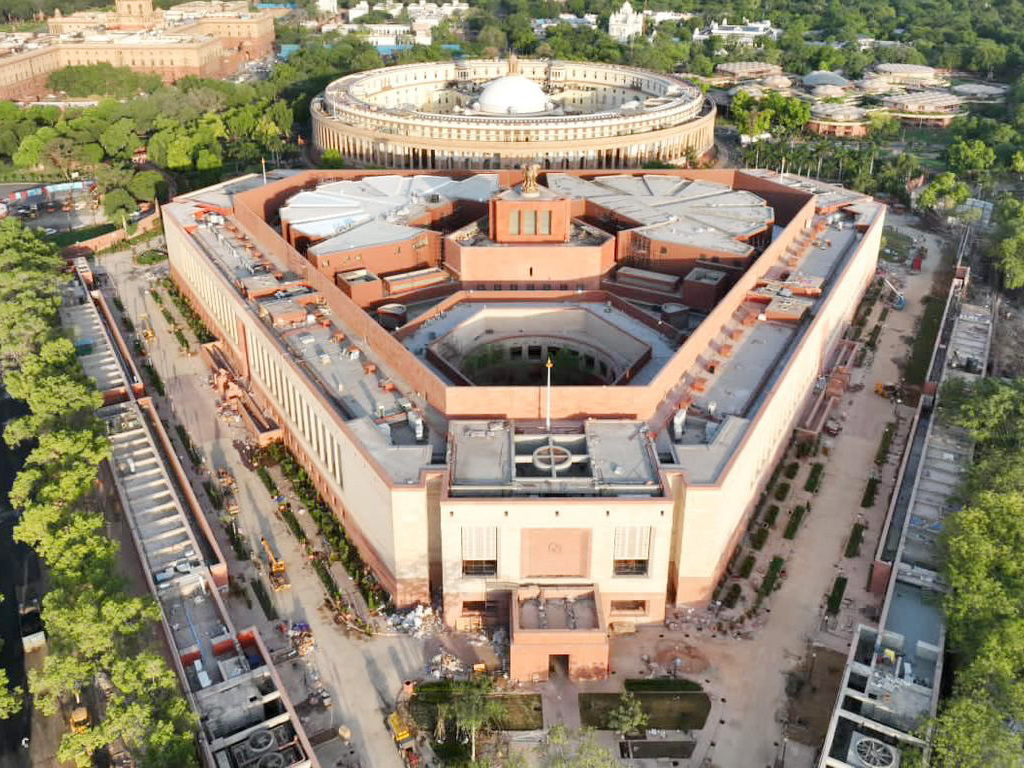
Image: Sansad Bhavan, Indian parliament in New Dehli.