#Canada #ON – The Anglican Church of Canada took a significant step in its response to the country’s expansive assisted suicide program last week, as the Council of General Synod approved a new set of pastoral liturgies for use with individuals who choose assisted death.
In a decision made during its June 2026 meeting in Mississauga, Ontario, the Council authorized Ministry with the Sick and Dying in the Context of MAiD (also described as Pastoral Liturgies at the Time of Death in Contexts of Medically Assisted Dying) for trial use, evaluation, and feedback where permitted by diocesan bishops. The 66-page resource includes prayers, rites for reconciliation, anointing, Holy Communion, blessings, and guidance for clergy and pastoral teams accompanying those who have opted for assisted suicide (colloquially referred to in Canada as “Medical Assistance in Dying”, or “MAID” as a politically corrected term)
The document, developed by a Ministry with the Sick and Dying Task Group, emphasizes compassionate accompaniment rooted in Christian hope and the dignity of persons made in God’s image. It does not endorse euthanasia as church policy nor require clergy to participate against their conscience. Instead, it provides optional liturgical tools for situations where individuals and families request pastoral support before, during, and after the procedure.
This development builds on earlier Anglican Church of Canada resources, including the 2017–2018 document In Sure and Certain Hope and a collection of theological essays titled Faith Seeking Understanding. Church leaders have previously stressed a focus on pastoral care rather than political opposition to Canada’s euthanasia law, which has grown into one of the world’s largest assisted-dying programs since its introduction in 2016.
News of the trial liturgy spread quickly and drew sharp criticism from more traditional Anglican voices. Groups such as the Prayer Book Society of Canada and commentators in conservative outlets described the resource as providing liturgical cover for what they view as a grave moral wrong, conflicting with historic Christian teaching on the sanctity of life. Some characterized it as an attempt to “solemnize” euthanasia through prayers and sacraments administered around the time of death.
Supporters within the church argued that the liturgies respond to the lived reality of Canadian Anglicans facing personal end-of-life decisions and allow for faithful ministry without judgment. Feedback on the trial resource will be collected until May 2027, with a revised version potentially brought forward for further consideration at the General Synod in 2028.
The full document is available for download on the Anglican Church of Canada’s website.
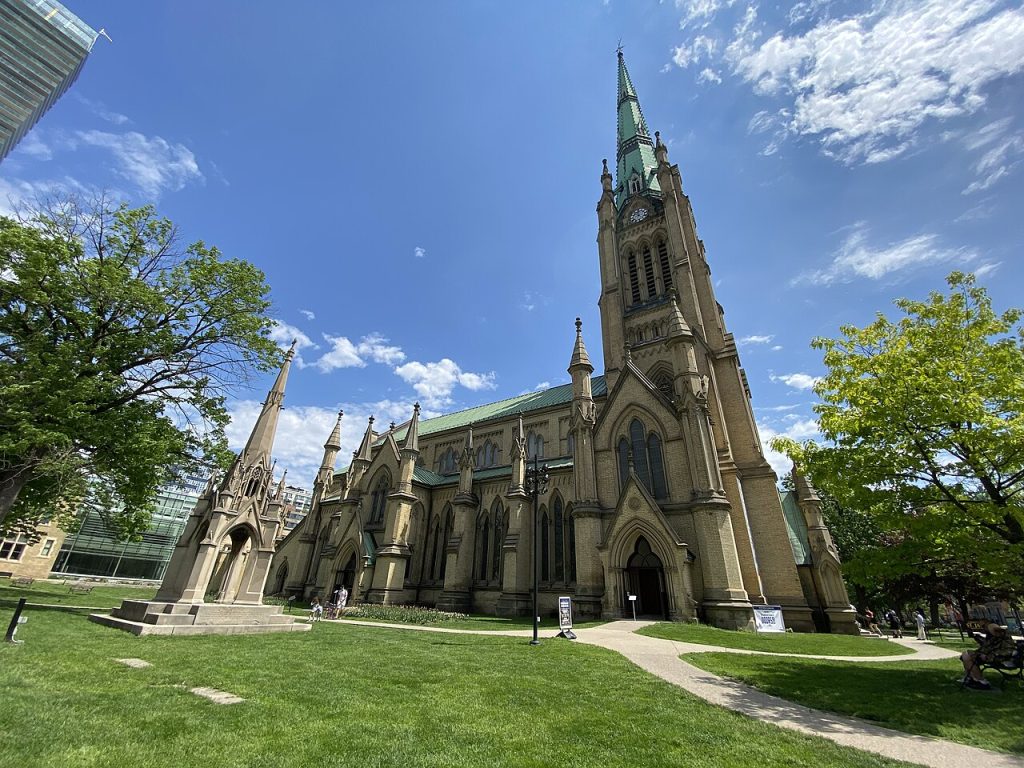
Image: Cathedral Church of St. James, the seat of the Anglican Diocese of Toronto that oversees Mississauga.