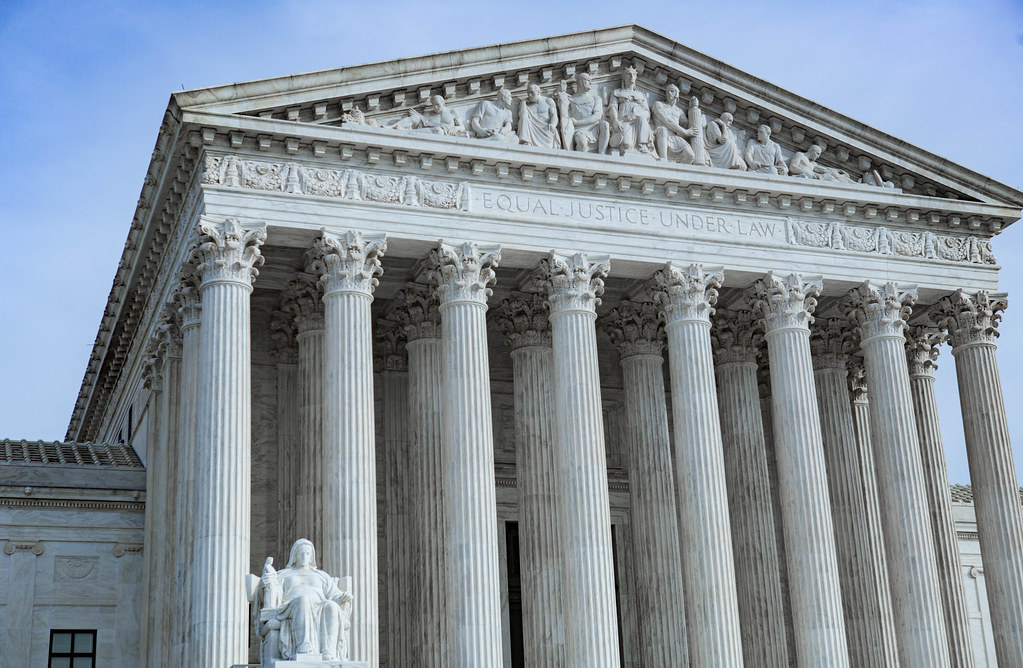
#USA #DC – The U.S. Supreme Court on Thursday preserved nationwide access to the abortion medication mifepristone, blocking lower-court restrictions on its distribution while a legal challenge continued to wind through the courts.
n an unsigned order, the justices stayed a ruling from the U.S. Court of Appeals for the Fifth Circuit that had sought to limit how the drug could be prescribed and mailed. The decision allowed women to continue obtaining mifepristone through pharmacies and by mail under current Food and Drug Administration rules as the underlying case proceeded, potentially into 2027.
The ruling came in response to applications from mifepristone manufacturers, including Danco Laboratories and GenBiPro, who argued that the lower court’s order would severely disrupt access to medication abortion, the most common form of abortion in the United States.
Justices Clarence Thomas and Samuel Alito issued forceful dissents, criticizing the majority’s decision to maintain the status quo.
Justice Thomas argued that the manufacturers and allied groups could not legitimately claim “irreparable harm” from restrictions on the drug’s distribution. He described their activities as a “criminal enterprise” and stated that they were not entitled to court relief based on lost profits from what he viewed as unlawful conduct.
“Applicants are not entitled to a stay of an adverse court order based on lost profits from their criminal enterprise,” Thomas wrote. “They cannot, in any legally relevant sense, be irreparably harmed by a court order that makes it more difficult for them to commit crimes.”
Justice Alito contended that the order effectively permitted a “scheme to undermine” the Supreme Court’s 2022 decision in Dobbs v. Jackson Women’s Health Organization, which overturned Roe v. Wade and returned abortion regulation primarily to the states. He argued that the applicants had not demonstrated imminent irreparable injury and that the stay should have been denied.
The FDA first approved mifepristone in 2000 for use in medication abortions. In 2021, the agency relaxed certain requirements, allowing prescriptions without an in-person visit in some cases and permitting distribution by mail. Louisiana and other challengers questioned the drug’s safety profile and the FDA’s authority to maintain those relaxed rules following the Dobbs decision.
Pro-access advocates maintained that extensive data showed the two-drug regimen involving mifepristone and misoprostol was safe and effective. They viewed the challenge as a politically motivated attempt to restrict abortion access nationwide despite state-level variations.
The Supreme Court’s interim order did not resolve the merits of the case. Litigation was expected to continue in the lower courts, with the possibility of the issue returning to the high court on a full appeal.
This development underscored the ongoing national divisions over abortion policy nearly four years after the Dobbs ruling. While many states moved to restrict or ban the procedure, others worked to protect and expand access, including through medication options that cross state lines.
Image: Supreme Court of the United States building in the Washington, D.C.