#Canada #Quebec – The Canadian Conference of Catholic Bishops (CCCB) have formally challenged Quebec’s Bill 21 through their intervention in the Supreme Court of Canada case Hak v. Quebec. The Supreme Court granted intervener status to the CCCB in mid-to-late 2025, as part of a record number of intervenors in this landmark case that challenges the constitution and religious freedoms. Canadian bishops argued to the Supreme Court that Quebec’s Bill 21 “denies the divine” and embodies an anti-religious ideology, while Quebec has defended its use of the “Notwithstanding Clause” to protect this Bill from constitutional challenge and aims to advance its policy on total state secularization (laïcité) and complete divide between religion and state.
Bill 21, passed in 2019, bans public-sector workers in positions of authority (such as teachers, judges, police officers, and prosecutors) from wearing visible religious symbols while performing their duties. It invoked the notwithstanding clause to shield it from certain Charter challenges. The bishops contend that Quebec overstepped its provincial powers since religion is a federal matter under Canada’s constitution. The intervention comes amid recent landmark hearings on Bill 21’s use of the notwithstanding clause to uphold state secularism against Charter challenges.
The CCCB filed key materials in mid-March 2026. Their lawyer, Philip Horgan, presented the CCCB’s position during the Supreme Court hearings, which ran from March 23–26, 2026 (one of the longest hearings in Canadian history). Horgan argued that fundamental issues of public morals and religion must be handled federally, as no province can unilaterally alter Canada’s foundational beliefs about religion. The law’s purpose and effect impose “an anti-religious, non-neutral ideology.” It “turns the expression of religious belief, through the wearing of symbols, into something to be punished” because it conflicts with laïcité. The prohibition “manifests an outlook from the provincial government that denies the divine.” The CCCB argument drew on Catholic social teaching, including subsidiarity (handling matters at the most appropriate level of authority), while emphasizing that the Canadian constitutional framework protects religious pluralism rather than suppressing it.
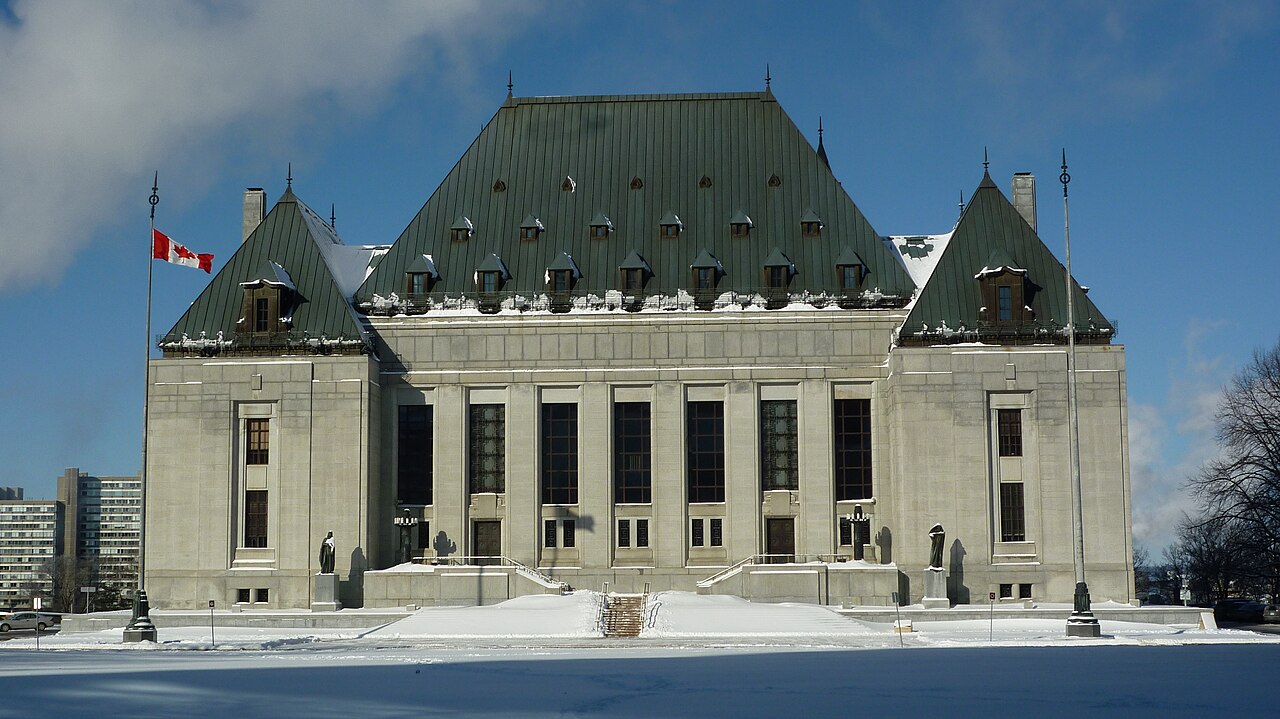
The Supreme Court heard arguments in late March 2026 as part of a landmark challenge involving over fifty intervenors. Lower Quebec courts had upheld Bill 21 largely due to the notwithstanding clause. The CCCB joined religious and civil liberties groups in challenging it, while some provinces defended provincial autonomy and the clause’s use. Justices pushed back on some points, such as when Justice Malcolm Rowe questioned specific constitutional provisions making Canada “pro-religion” beyond the Charter’s preamble referencing the supremacy of God. Horgan cited protections for denominational schools in the Constitution Act. The CCCB’s factum explicitly framed Bill 21 as attempting to amend Canada’s federal constitution by enforcing a particular philosophical stance on religion.
This intervention aligned with the CCCB’s broader advocacy for religious freedom in Canada. A decision from the Supreme Court is expected later in 2026 and could have wide implications for the notwithstanding clause, federalism, and religious rights. This case comes at a time in Canada where religious liberties have become threatened on not just a provincial, but federal level, as just recently the federal parliament had passed an “Anti-Hate” Bill that removed religious protections, widely accused to be a bill that ‘bans quoting the Bible,’ which the CCCB also opposed alongside other religious groups. Additionally, use of the notwithstanding clause has in recent time become frequently used in provincial legislature, especially in both Quebec and Alberta, where anti-federal sentiments and spirits of separatism run high in a divided nation.
On April 2nd, 2026, Quebec also passed Bill 9, another ‘secularism’ law that bans street prayers, prohibits dedicated prayer rooms in universities, and prohibits the wearing of religious symbols to daycare workers and more educators. The bill also impacts subsidized private schools and will have an impact on Catholic independent schools in Quebec, as well as other religious private schools that receive subsidization from the provincial government. New hires to these private schools will be unable to wear religious symbols, while current staff will be exempt at this time. Religious instruction will be banned during school hours and must occur after school hours and be optional to students. Finally, students to these schools cannot be chosen on a basis of their religion. This bill was also opposed by Christian leaders in Quebec, as well as other religious leaders. Like Bill 21, the legislation was passed with use of the notwithstanding clause, although the resolution of the court challenge on Bill 21 will likely determine the fate of Bill 9 as they are both similar in principle, if not Bill 9 marks an extended reach from the state as it relates to religious freedoms.
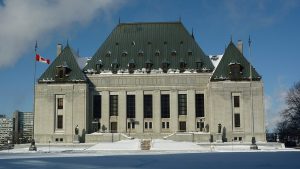
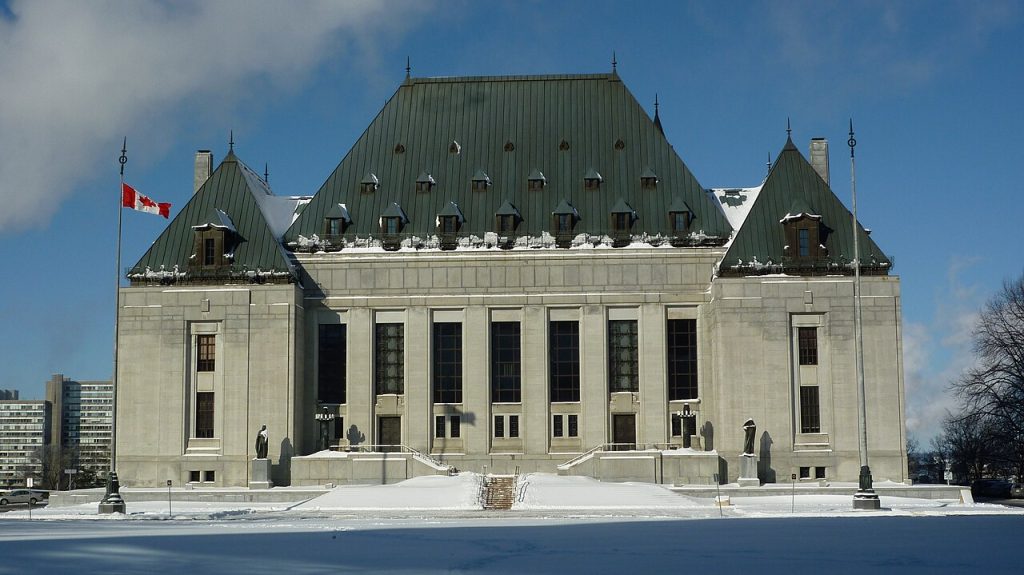
Image: Supreme Court of Canada building in the winter, 2012.