#HolyLand #Jerusalem – On Palm Sunday, March 29, 2026, Israeli police prevented Latin Patriarch Cardinal Pierbattista Pizzaballa (the highest-ranking Catholic leader in the Holy Land) and Custos of the Holy Land Fr. Francesco Ielpo, OFM (the official guardian of the Church of the Holy Sepulchre) from entering the church to celebrate a private Palm Sunday Mass.
The Church of the Holy Sepulchre has been closed since February 28th, 2026, due to the Iran War, and public liturgies were cancelled. However, Franciscan friars (Custody of the Holy Land) and other resident clergy have maintained daily prayers, rites, processions, and scheduled celebrations behind closed doors as per prior agreements.
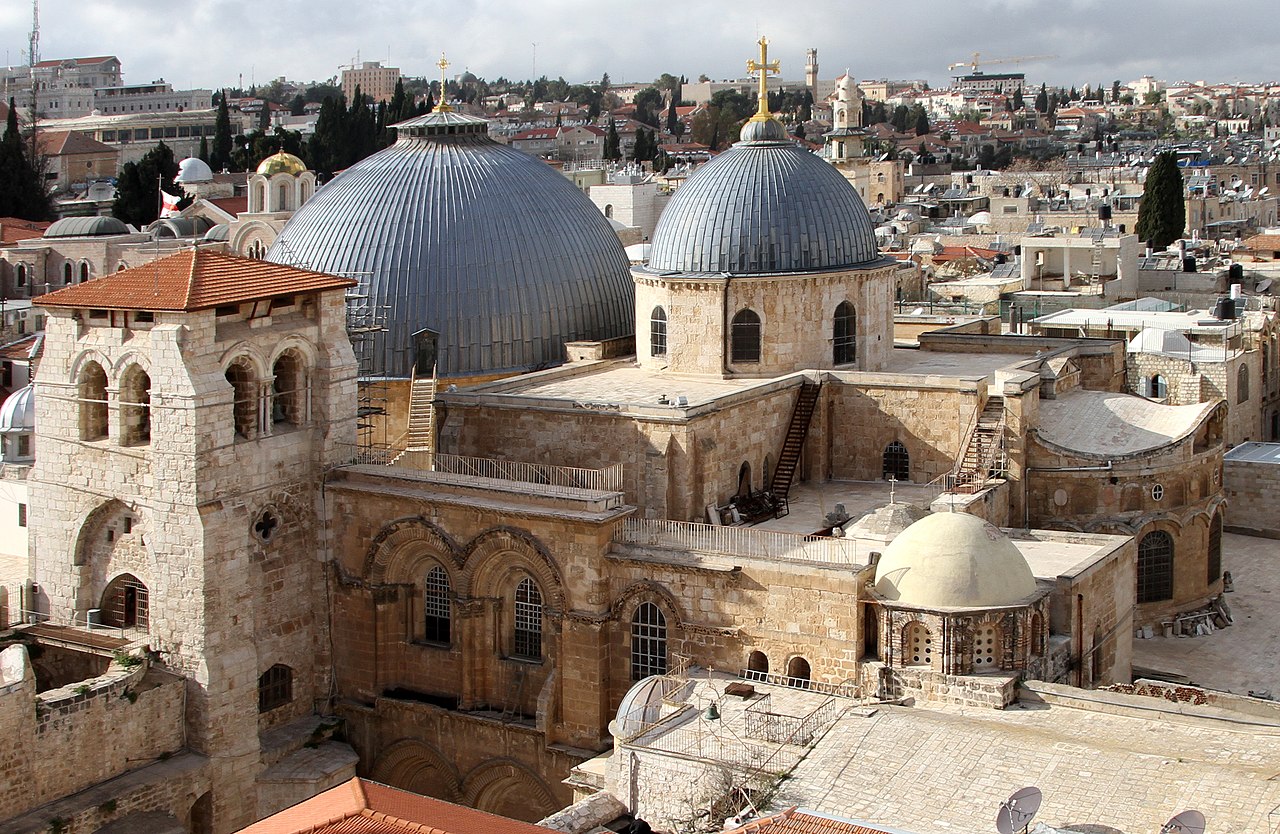
Today, March 29th, 2026, the Latin Patriarch and Custos were proceeding privately on foot to the Church of the Holy Sepulchre (no procession, no public ceremony, no large group, and no external signs of a formal event However, Israeli police stopped them en route and compelled them to turn back. As a result, for the first time in centuries, the heads of the Catholic Church in the Holy Land could not celebrate Palm Sunday Mass inside Christianity’s holiest site (traditionally believed to mark the sites of Jesus’s crucifixion, burial, and resurrection).
The Latin Patriarchate and the Custody of the Holy Land issued a joint statement describing the decision as “a manifestly unreasonable and grossly disproportionate measure.” They expressed deep sorrow that even private prayer by the church’s own leaders was blocked on such a sacred day.
Israeli police officials and the Foreign Ministry cited security restrictions linked to the ongoing Iran War and the broader closure of major holy sites in Jerusalem’s Old City. They stated that the Old City is a complex area where large emergency vehicles cannot easily access in case of a mass-casualty incident. General rules limited gatherings (reports mentioned a 50-person cap in some contexts), and even small private entries were not approved due to overall risk. One Israeli statement mentioned acting “out of special concern for [the Patriarch’s] safety,” with “no malicious intent.” This incident occurred despite earlier announcements that some limited clergy access might be possible for internal prayers, and amid reports that other holy sites (synagogues, mosques) operated under similar but sometimes less restrictive conditions in practice.
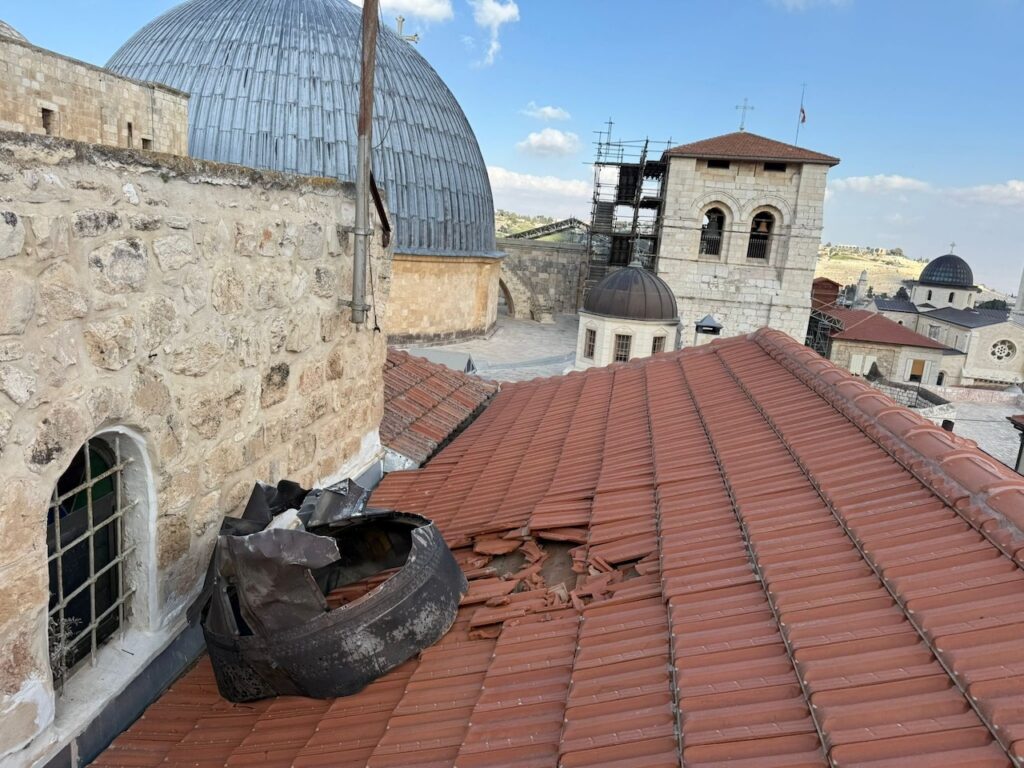
Israeli President Isaac Herzog personally called Cardinal Pizzaballa later that day, March 29, 2026, to express his “great sorrow” over the incident in which the cardinal and the Custos were prevented from entering the Church of the Holy Sepulchre for Palm Sunday prayers. In his statement, Herzog explained that the blocking stemmed from security concerns due to the ongoing threat of Iranian missile attacks, noting that missile fragments had recently fallen near the Old City. He reaffirmed Israel’s unwavering commitment to freedom of religion for all faiths and to upholding the status quo at Jerusalem’s holy sites.
Israeli Prime Minister Benjamin Netanyahu defended the action, stating there was “no malicious intent whatsoever” and that the cardinal was blocked “out of special concern for his safety and that of his party” due to ongoing security threats. He added that Israel is preparing a plan to allow church leaders limited access in the coming days.
Italian Prime Minister Giorgia Meloni strongly criticized the incident. She stated that the Church of the Holy Sepulchre is a sacred Christian site that “must be preserved and protected for the celebration of sacred rites.” Meloni added that preventing the Latin Patriarch and the Custos from entering — even privately — on Palm Sunday “constitutes an offense not only to believers, but to every community that recognizes/respects religious freedom.” Italy’s Foreign Minister Antonio Tajani announced he would summon Israel’s ambassador to Rome for clarifications and a formal protest.
US reactions to the March 29, 2026 incident were limited. U.S. Ambassador to Israel Mike Huckabee, in a public statement, described the police decision to block Latin Patriarch Cardinal Pierbattista Pizzaballa and the Custos from a private Palm Sunday Mass as an “unfortunate overreach” that was “difficult to understand or justify.” He pointed out that the small group was well below the 50-person gathering limit and emphasized the unusual nature of barring senior clergy from a private ceremony on such a significant day.
US Congressman Riley M. Moore (R-WV) issued a statement expressing concern. He expressed he was “deeply troubled” by what occurred and urged the Israeli government to allow at least private liturgies to be celebrated during Holy Week.
French President Emmanuel Macron strongly condemned the police decision. He expressed full support for Latin Patriarch and Christians in the Holy Land. Macron stated that the action “adds to the worrying increase in violations of the status of the Holy Places in Jerusalem” and emphasized that freedom of worship must be ensured for all religions. French far-left politician Jean-Luc Mélenchon (leader of La France Insoumise), in a post on X, accused Israeli Prime Minister Benjamin Netanyahu of “persecuting Christians of the East in Lebanon, in occupied Palestine, and even in Jerusalem during the central week of Christianity.” He added that President Macron was right to support the Patriarch of Jerusalem, noting that “the Holy Sepulchre is under French protection” and that “France must not let itself be humiliated.”
Update: On Monday, March 30th, 2026, the Latin Patriarchate of Jerusalem and the Custody of the Holy Land issued a joint press release confirming that the issues had been “addressed and resolved in coordination with the relevant authorities.” In agreement with the Israel Police, “access for representatives of the Churches has been secured” to conduct the liturgies, ceremonies, and preserve ancient Easter traditions at the site. However, existing restrictions on public gatherings remain in force due to the war, so celebrations will focus on official representatives rather than large public crowds (with many events likely broadcast).
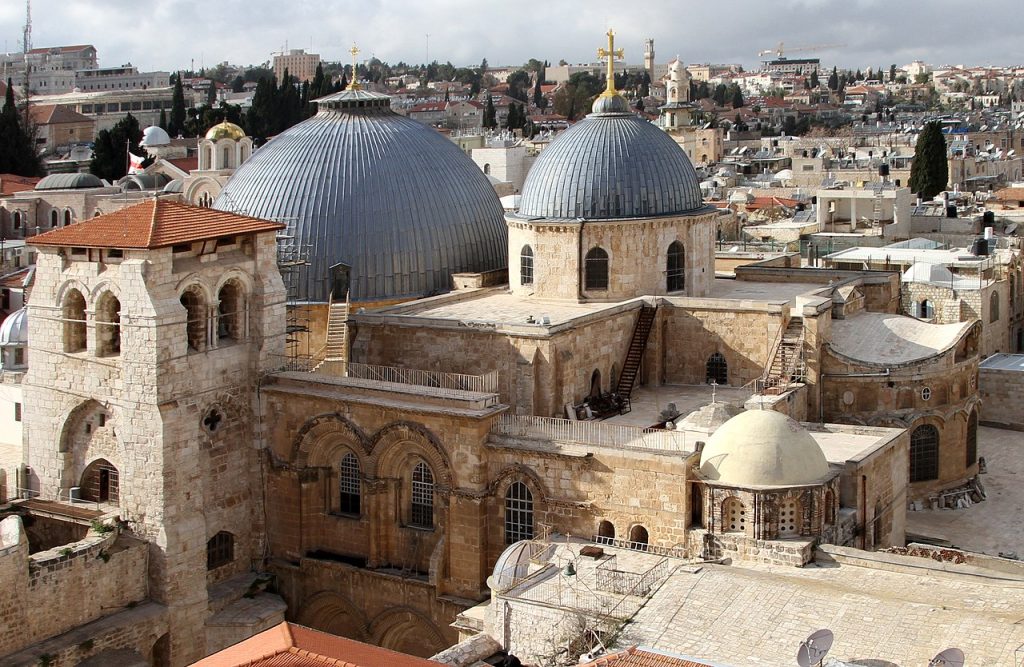
Image: the Church of the Holy Sepulchre in 2010.