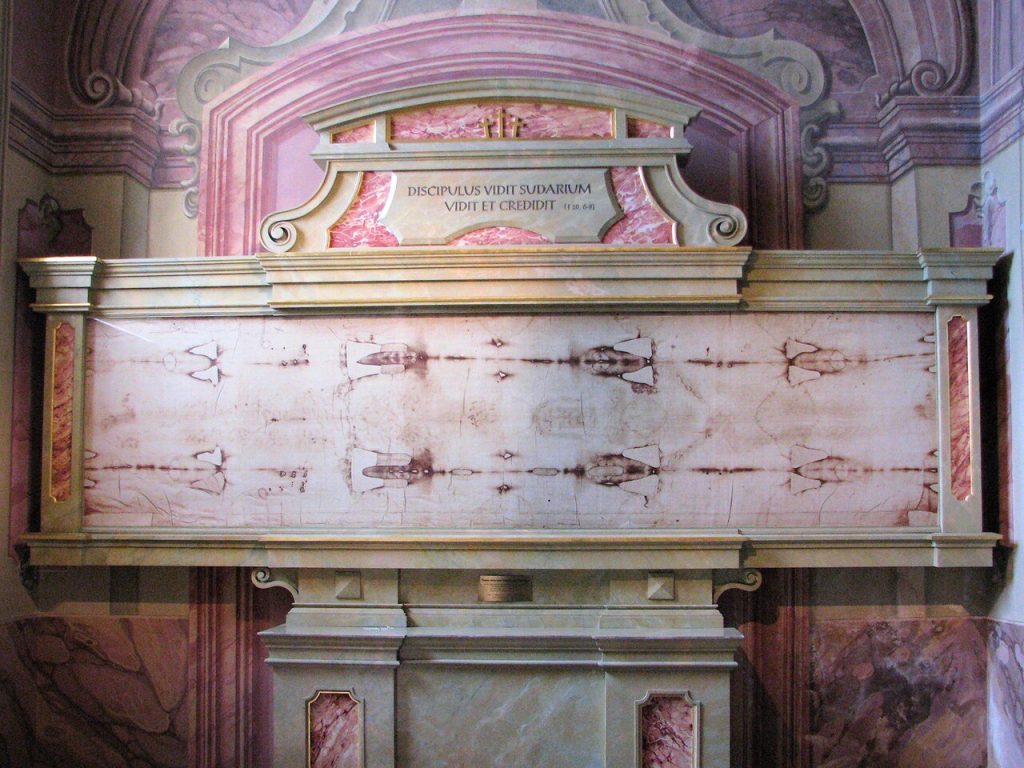
A new study portrays the Shroud of Turin (a linen cloth bearing the image of a crucified man, long debated as potentially Jesus’ burial shroud or a medieval artifact) as a “biological time capsule” heavily contaminated by centuries of handling, storage, and environmental exposure. It reveals a complex mix of DNA from multiple people, Mediterranean/Near Eastern signals, skin microbes, saline-adapted organisms, and later global contaminants (including post-15th/16th-century plants and animals). The presence of Near Eastern mtDNA and possible earlier signals is noted, but the authors of the study emphasized that heavy, layered contamination (including from the 1978 researchers) makes it extremely difficult to isolate any “original” DNA or use this data to definitively date the cloth or confirm a 1st-century origin.
The study re-analyzed DNA from dust, fibers, and linen samples collected in 1978 during an official investigation of the Shroud of Turin. The goal was to use modern shotgun metagenomic sequencing and proteomics to characterize human, microbial, plant, and animal DNA traces, assess contamination, and gain insights into the cloth’s historical handling, preservation, and possible geographic origins. It built on the team’s earlier 2015 work, which had identified some Mediterranean and Near Eastern signals.
Researchers examined 12 samples from the 1978 collection (linen filaments from body-image areas like the back, face, hands, and feet, plus vacuumed dust and a reliquary sample). DNA was extracted in clean-room conditions using ancient-DNA protocols. They performed Illumina sequencing, metagenomic classification (Kraken2, MetaPhlAn), human mtDNA haplogroup analysis, damage pattern checks, and proteomics via mass spectrometry. Controls included the DNA of one 1978 collector and artificially contaminated modern linen. Two threads from the reliquary were also radiocarbon-dated.
Endogenous human DNA content on the Shroud was low (<10% of mapped reads). The samples showed multiple mitochondrial (mtDNA) haplogroups: K1a1b1a (matching the 1978 collector’s mitogenome; confirmed as contamination via kinship analysis), H2a2 (the reference sequence), H1b (common in Western Eurasia). H33 (prevalent in the Near East, especially among the Druze population).
Rich in skin-associated bacteria on the Shroud (e.g., Cutibacterium acnes, Staphylococcus epidermidis) were found. Notably, archaea adapted to high salinity (Halobacteria) and salt-tolerant fungi (e.g., Debaryomyces hansenii), suggesting exposure to saline environments (possible Dead Sea-like conditions). Molds like Aspergillus point to degradation over time.
Abundant traces from cultivated plants (carrot, wheat, corn, bananas, peanuts) and domesticated animals (cattle, pigs, chickens, dogs, cats) were also found. Some plants (e.g., Mediterranean red coral mentions in summaries) and New World species (corn, peanuts, bananas) indicate post-Columbian or later contamination. Carrot DNA showed strong signals from Western European cultivars.
Overall, the paper documents a rich but highly mixed metagenomic profile dominated by contamination, offering clues about the Shroud’s long history of human contact and environmental exposure (including some Near Eastern signals) while highlighting the limitations of using such data for definitive historical claims. It calls for further careful, non-destructive analyses.
Reference: https://www.biorxiv.org/content/10.64898/2026.03.19.712852v1.full.pdf
Image: the Shroud of Turin.