#HolyLand #Jerusalem – In the annual Easter message to the faithful, Jerusalem’s patriarchs and church heads speak on fresh regional war’s cycle of death in the Holy Land, Gaza, Lebanon, and beyond, in contrast to Christ’s resurrection. It calls believers and goodwill actors to relentless work and prayer for bloodshed victims, advocating justice and peace extending from Jerusalem to Tehran and global ends
The Easter message, posted amid tensions between the Catholic Church and Israeli government, follows the Catholic Church’s response to the Iran War with consistent calls for an immediate ceasefire, a return to diplomacy and dialogue, and warnings against the “spiral of violence.” Church leaders have emphasized the sanctity of life, the protection of civilians, and the risk of wider instability affecting the Middle East’s fragile Christian communities.
Pope Leo XIV has been the most prominent voice. In his first public reaction on March 1, 2026, during the Sunday Angelus, he expressed “deep concern” over the strikes and Iran’s retaliatory actions, warning of a potential “tragedy of enormous proportions.” He stated:
“Stability and peace are not built with mutual threats, nor with weapons, which sow destruction, pain, and death, but only through a reasonable, authentic, and responsible dialogue.”
He appealed to all parties to “assume their moral responsibility” and halt the violence before it becomes an “irreparable abyss,” urging diplomacy to take precedence.
Cardinal Pierbattista Pizzaballa, Latin Patriarch of Jerusalem, has highlighted the human cost to Christians and others in the Holy Land and broader region. He warned against invoking God’s name to justify the conflict, calling it “the gravest sin” and stressing that war is driven by political interests, not holy causes. He urged believers to stand with the suffering rather than endorse violence. The patriarchate has also cancelled or modified Holy Week events (e.g., Palm Sunday procession) due to security risks and restrictions from the conflict.
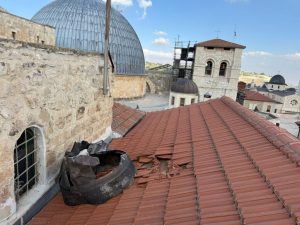
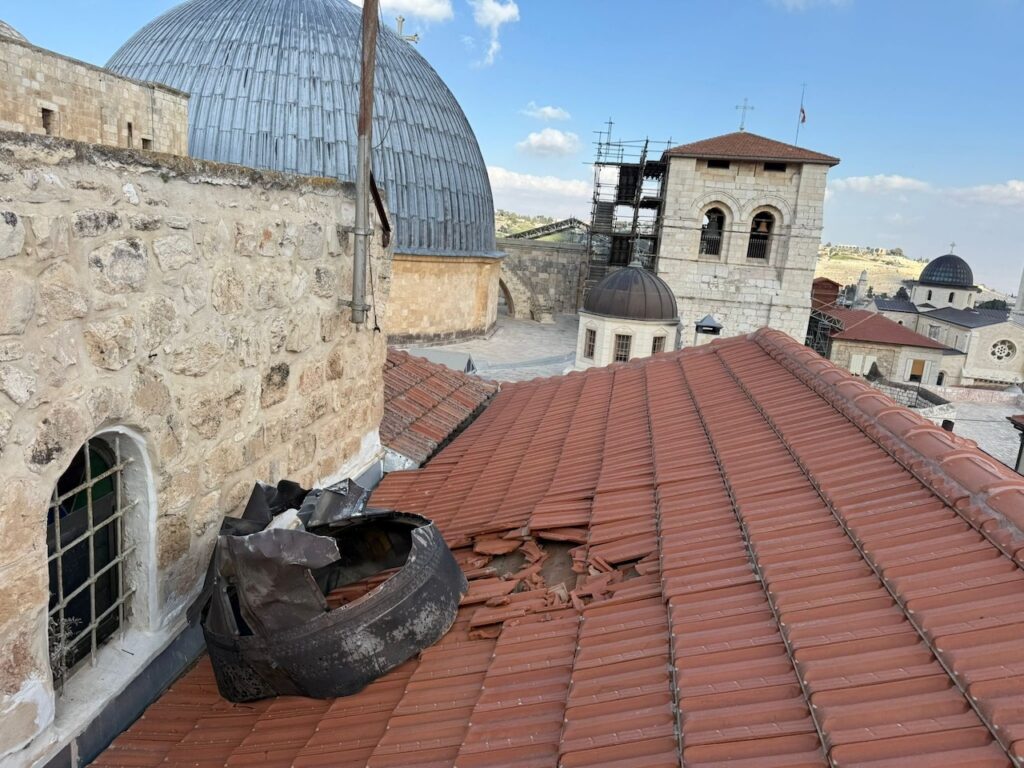
Israeli authorities closed the holiest site to the Catholic and Orthodox Christian faith, the Church of the Holy Sepulchre, to the public on February 28, 2026. This holy site is historically known as the location in which Jesus was killed and where his tomb was located from which he resurrected from, marking it especially important for Easter worship. The closure of the church was triggered by the escalation of the Israel–Iran conflict, which was predicted at its launch to last until Easter / Passover. On March 12th, 2026, missile fragments fell near the holy site by unknown parties, prompting further concerns and uncertainties about whether it was safe to open the church.
The Church of the Holy Sepulchre is located less than a mile from the Dome of the Rock, which has been under speculation to be a likely target in the Iran War due to its religious significance to Muslims worldwide and tense desires from esoteric figures within Israeli society to have the mosque destroyed to build a Third Temple. This rhetoric has echoed since the start of the war, especially through evangelical Christian fundamentalists in U.S. government. In 2018, Secretary of War Pete Hegseth stated that the construction of the Third Temple would be a “miracle” and wished for it. According to Orthodox Christian belief, however, the construction of said temple would mark the rise of the anti-Christ and lead to end times.
At this time, the closure of the Church of the Holy Sepulchre remains indefinite due to ongoing security concerns and the broader regional war. It is one of the longest continuous restrictions in the church’s modern history. However, Franciscan friars (Custody of the Holy Land) and other resident clergy have maintained daily prayers, rites, processions, and scheduled celebrations behind closed doors, in line with the historic Status Quo agreement that governs the site.
Holy Week 2026 begins March 29 (for Western/Latin Christians; Orthodox Easter is April 12). Traditional public celebrations have been cancelled or severely curtailed. There will be no Palm Sunday procession from the Mount of Olives, no public Chrism Mass on Holy Thursday, and other major Lenten and Holy Week rites in the church and at related Holy Places are disrupted or will be moved.
Church leaders (Latin Patriarchate, Custody of the Holy Land, and others) expect limited services for clergy and religious only, modelled on the COVID-19 pandemic restrictions. They are actively negotiating with Israeli police and authorities for even this reduced access. It is not yet certain exactly what form Easter liturgies (including the Holy Fire ceremony important to Orthodox Christians) will take. Officials emphasize that safety comes first, and no firm predictions are possible amid the evolving situation.
Cardinal Pierbattista Pizzaballa described the disruption as a profound spiritual loss amid the “harshness of this time of war,” while urging personal prayer and perseverance.
References: https://x.com/LPJerusalem/status/2037454293544874024?s=20
Image: the missile fragments found on the grounds of the Church of the Holy Sepulchre in mid-March.