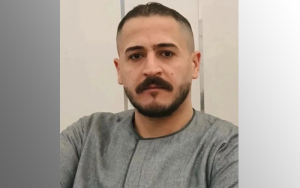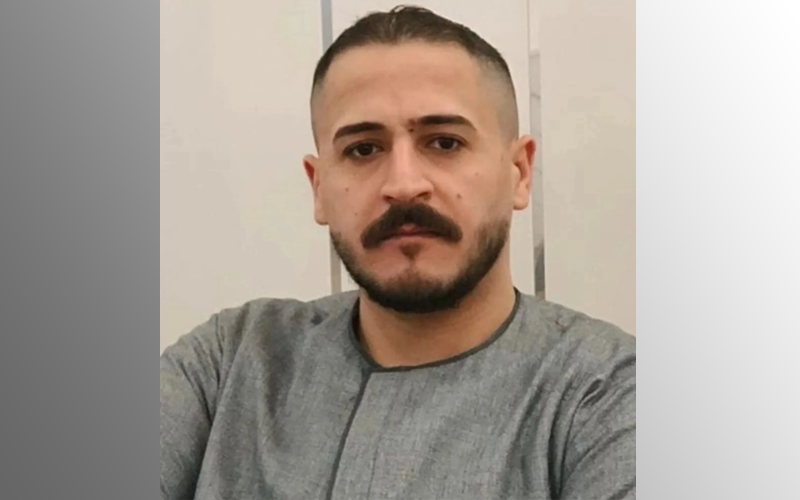
#Egypt #Cairo – Egyptian authorities detained Said Mansour Rezk Abdelrazek, a man who converted from Islam to Christianity, for more than a year and prosecuted him on charges that carried the possibility of the death penalty or up to 25 years in prison. The United States has monitored the situation, and U.S. lawmakers from Congress petitioned the Egyptian president for his unconditional release.
Security officers arrested Abdelrazek, then about 30 years old, at his home in Cairo on July 15, 2025. After roughly nine months of pretrial detention, prosecutors referred his case to the Terrorism Circuit of the First Criminal Court in Badr. The charges included contempt for Islam, inciting public disorder, disseminating false information, and joining a banned terrorist organization. His lawyers and groups such as Coptic Solidarity maintained that the alleged terrorist organization did not exist and that the case stemmed from his conversion, online expressions of Christian faith, and efforts to change the religion listed on his official identity documents.
In early November 2026, prosecutors requested the maximum penalty. The court adjourned proceedings, with the defense scheduled to present closing arguments on December 8, 2026. Abdelrazek’s legal team, including lawyer Said Fayez, described the prosecution as punishment for his refusal to renounce his Christian beliefs.
Advocacy organizations and Abdelrazek’s fiancée, Sophia, reported that he endured torture and ill-treatment while detained. Accounts described attempts to remove a cross tattoo, prolonged restraint in a suspended position against a wall, physical and psychological abuse by authorities and other inmates, and denial of adequate medical care. He was held in the 10th of Ramadan prison. Amnesty International called for his unconditional release, stating he was detained solely for exercising freedom of religion or belief. The U.S. Commission on International Religious Freedom listed him among religious prisoners of conscience and noted reports of torture.
Abdelrazek’s difficulties with Egyptian authorities dated back years. He converted around 2016 (some accounts placed the formal step slightly later). After facing family, social, and official pressures—including forced divorce and separation from a child—he left for Russia in 2018–2019 seeking asylum. Russian authorities later detained him in connection with a private video considered offensive to Islam and deported him to Egypt in 2024. Upon return, Egyptian officers held him briefly, interrogated him about his faith, pressured him to monitor other converts, and released him with instructions not to speak publicly or proselytize. He was rearrested in July 2025 after resuming online posts.
In mid-November 2026, several U.S. lawmakers sent a letter to Egyptian President Abdel Fattah el-Sisi urging Abdelrazek’s immediate release, the dropping of all charges, and an end to the use of blasphemy and counter-terrorism laws against peaceful religious practice. Signatories included Senator Josh Hawley of Missouri and Representatives Riley Moore of West Virginia (who drafted the letter), Barry Moore of Alabama, Elijah Crane of Arizona, Buddy Carter of Georgia, and Marlin Stutzman of Indiana. A copy went to Secretary of State Marco Rubio. The letter described the detention as a violation of international human rights standards and part of a broader pattern targeting Christians and religious minorities. The U.S. State Department stated it was monitoring the trial closely and encouraged Egypt to protect religious freedom for all citizens.
Alliance Defending Freedom and Coptic Solidarity supported the case, organized petitions that gathered tens of thousands of signatures, and highlighted it as a test of religious liberty in Egypt. Egypt’s constitution names Islam the state religion and Sharia principles a primary source of legislation. Article 98(f) of the penal code criminalizes contempt for “heavenly” religions, with penalties of up to five years, while other national-security provisions can carry far heavier sentences. Converts from Islam have long faced practical barriers to official recognition of their change of faith.
As of late November 2026, Abdelrazek remained in detention awaiting the December 8 hearing. International attention continued to focus on whether the court would treat the case as a matter of protected religious belief or as a national-security offense.
Cover Image: Said Mansour Rezk Abdelrazek (Credit: Alliance Defending Freedom)