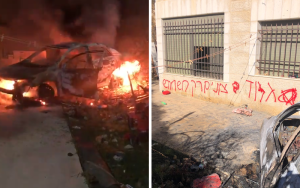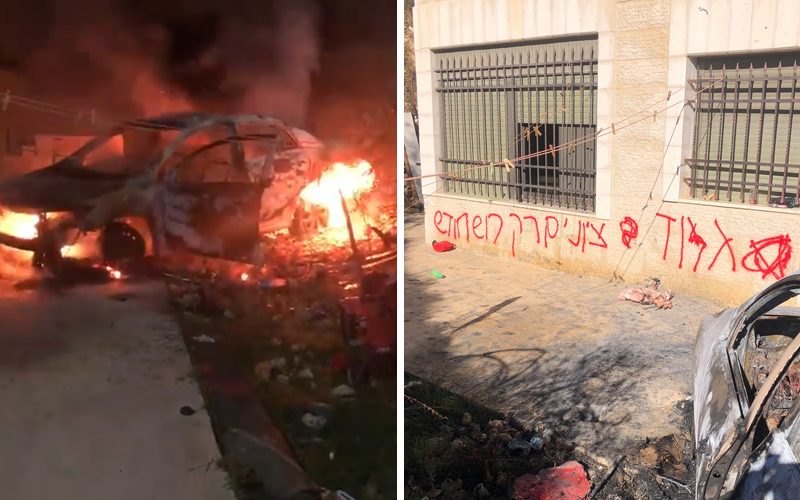
#HolyLand #WestBank – Israeli settlers set fire to a car outside a Palestinian Christian family’s home and spray-painted racist slogans on the walls in the early hours of November 11th, 2026, while the family slept inside, according to local reports and statements from residents. Additional attacks occurred in other villages on November 21st, 2026, which included arson and racial slogans targeting non-Jews as the threat to Christians and Muslims in the region remain ongoing.
Yousef Hleis, a resident of Jerusalem’s Old City who was visiting his mother’s house in Taybeh with his wife and three children—including an 8-month-old baby—said neighbors called him repeatedly around 1:45 a.m. He woke to an explosion and found the vehicle engulfed in flames. Family members later found Hebrew graffiti that included the phrases “Death to Arabs” and “Revenge,” along with other partly legible slogans. Hleis notified Israeli authorities, who arrived roughly half an hour later and inspected the scene. No surveillance cameras captured the attackers, and no arrests were immediately reported. He filed a police complaint alleging a racially motivated attack.
The incident was not isolated. Residents and church leaders described a pattern of harassment, property damage, and land encroachment in and around Taybeh, the last fully Christian village in the West Bank, with a population of about 1,200. In mid-October, during the olive harvest, masked settlers attacked local farmers and a visiting European diplomatic delegation, injuring people and damaging a Belgian vehicle. Church leaders in Jerusalem condemned the violence. Earlier incidents included vehicle arson, fires near the fifth-century ruins of the Church of St. George, and repeated incursions onto private land, where settlers grazed livestock and damaged olive groves.
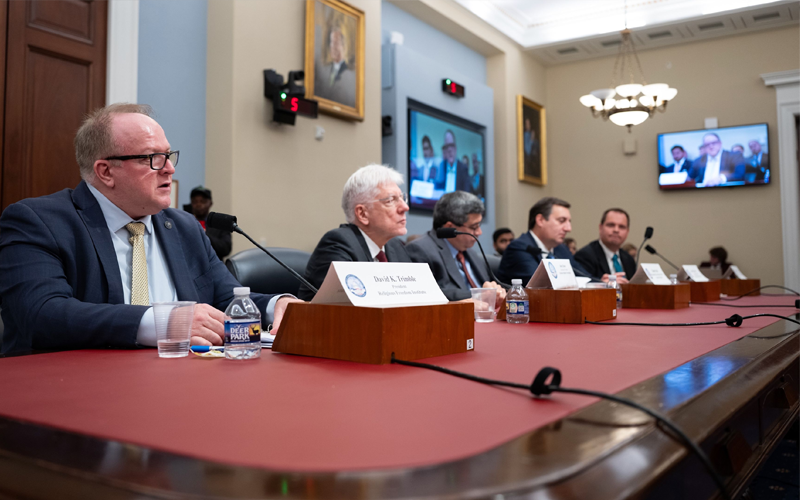
Father Bashar Fawadleh, the Latin Catholic parish priest of Christ the Redeemer Church in Taybeh, said the pressure had driven 16 families and many young people to leave the village recently. Speaking at a briefing organized by Aid to the Church in Need, he described settler actions as “systematic and planned,” involving arson, assaults, and intimidation that he called “criminal” and “terrorist.” He noted that nearby predominantly Muslim villages faced similar attacks and argued that a lack of accountability had created a “lawless” environment. “Why? Because we are Palestinians. Why? Because we have a huge land,” he said.
The Taybeh attack occurred amid a sharp rise in settler violence across the West Bank during the 2026 olive harvest. The United Nations and Israeli rights groups such as Yesh Din recorded hundreds of incidents—including physical assaults, blocked access to farmland, theft, and tree damage—exceeding levels from previous years. Israeli authorities previously declared Taybeh and a neighboring village closed military zones for non-residents following earlier attacks, citing the need to protect residents.
In the days after the Taybeh incident, suspected settler groups carried out additional overnight arson and vandalism attacks in nearby villages such as Kafr Malik, Deir as-Sudan, and Deir Abu Mash’al, torching vehicles and spraying graffiti. Israeli opposition figure Gadi Eisenkot denounced those later attacks as “Jewish terrorism in every sense of the word” and blamed government ministers for policies that he said had brought the area to the brink of anarchy. Israeli police opened investigations into several of the incidents, and the military said it condemned the violence and deployed forces to the areas. No injuries were reported in the Taybeh car fire.
Taybeh, identified by some with the biblical town of Ephraim where Jesus and his disciples sought refuge, has long been known for its churches, olive production, and local brewery. Residents and clergy said the cumulative effect of the attacks, combined with movement restrictions, threatened the community’s ability to remain on the land.
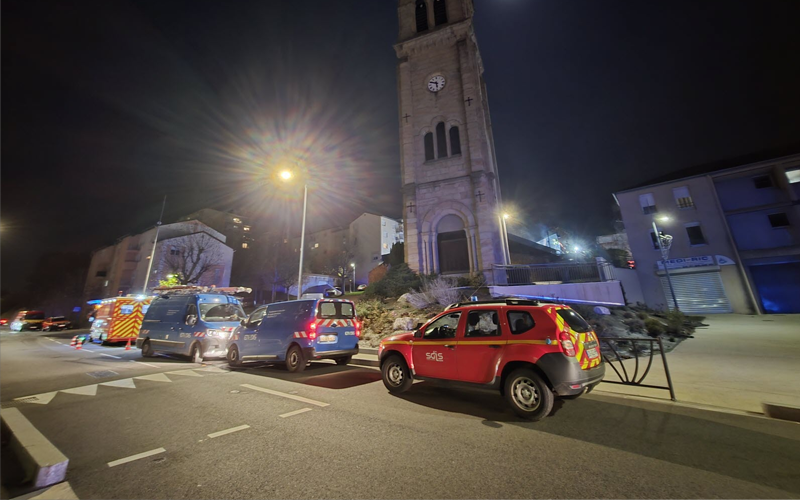
Cover Image: A still image from one of many vehicles set fire in Taybeh on November 11th, 2026 on the left / A photo of the vandalism “Zionists only from the beginning of the month” in Taybeh from the same date on the right. All images taken by Yousef Hleis and shared on social media.