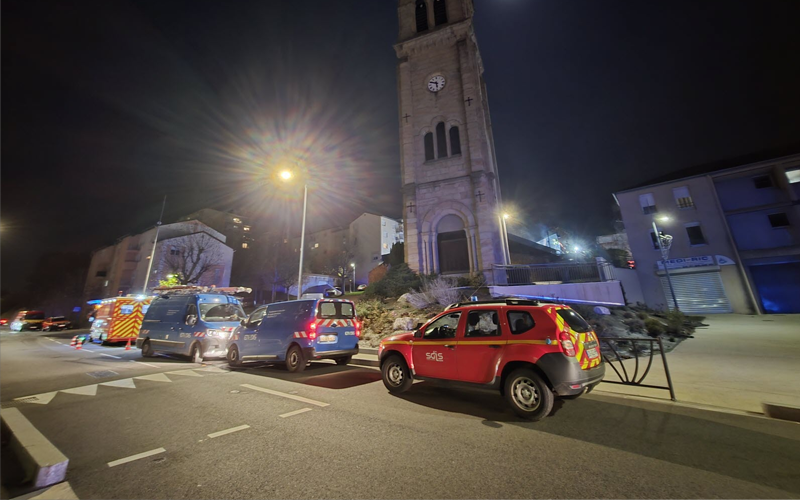
#France #Lorraine – Bones attributed to Saint Nicholas, the fourth-century bishop of Myra, were stolen from a reliquary inside the Basilica of Saint-Nicolas-de-Port and then destroyed, according to reports that emerged in early November 2026.
The priest of the basilica filed a complaint on November 2nd with police in nearby Dombasle-sur-Meurthe, reporting the theft of a reliquary containing precious bone fragments. Local newspaper L’Est Républicain first publicized the complaint on November 5th. Catholic media outlets later reported that investigators had arrested a suspect at his home. The man reportedly admitted to smashing the glass display case that protected the reliquary, removing its contents, and then burning and crushing the bones. He was said to have described his actions as driven by a “desire to destroy” the relic, which he associated with “fetishism.”
Authorities and the diocese had not publicly confirmed the full details of the arrest or the confession as of November 8th, and some Catholic commentators urged caution pending official statements. Reports indicated that the stolen item was not the basilica’s best-known arm-reliquary—an ornate silver, gold, and enamel piece containing a phalanx long associated with the site—but a smaller relic kept on the patronal altar.
The basilica, a Flamboyant Gothic landmark in Meurthe-et-Moselle near Nancy, has housed relics attributed to Saint Nicholas since roughly 1090–1098. According to local tradition, a Lorrain knight named Aubert de Varangéville brought a fragment, often described as a finger bone, from Bari, Italy. Bari itself had received the bulk of the saint’s remains in 1087, when sailors from the city removed them from Myra (in present-day Turkey). The presence of the relic in Lorraine helped establish a major regional pilgrimage and contributed to the construction of the present basilica beginning in the late fifteenth century. Saint Nicholas remains the patron saint of Lorraine, and the basilica continues to host large processions and celebrations, particularly around his feast day on December 6.
Relics attributed to Saint Nicholas are held at numerous sites worldwide, reflecting centuries of distribution after the 1087 translation to Bari. The primary collection rests in the crypt of the Basilica di San Nicola in Bari, Italy, where the bulk of the skeleton has been venerated since its arrival. Venice claims additional fragments taken from Myra during the First Crusade era, enshrined in the Church of San Nicolò al Lido. Smaller pieces—fingers, bone fragments, and other portions—have been documented or claimed in locations including other French churches, Germany, Ireland (where analysis has linked some material to the Bari relics), and scattered sites in the United States and elsewhere. Scientific examinations, including radiocarbon dating of certain fragments, have in some cases aligned with a fourth-century origin consistent with the historical Nicholas of Myra.
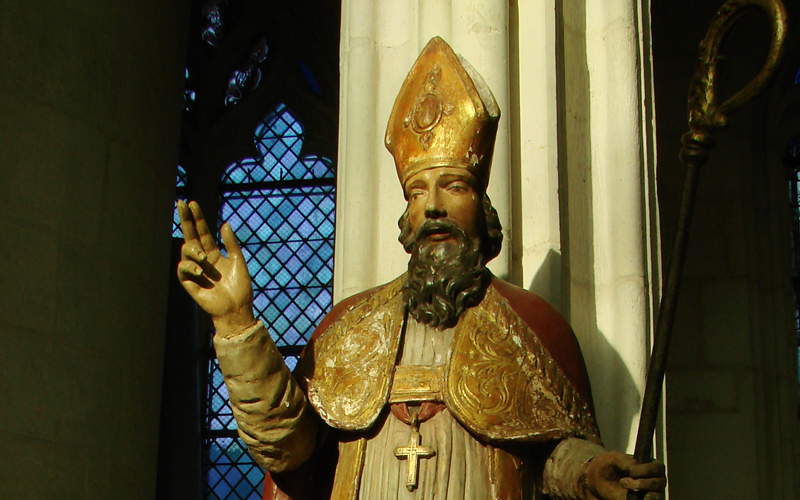
Cover Image: A statue of Saint Nicholas in the Basilica of Saint-Nicolas-de-Port in Lorraine (image is in public domain from Wikimedia Commons).