#Culture #Archaeology – A Spanish independent researcher published a textual analysis in August 2026 arguing that a disputed passage by the first-century Jewish historian Flavius Josephus may have originally preserved a neutral report of Jesus’ followers’ claims that he appeared alive after his crucifixion, rather than a direct affirmation of the resurrection.
Jesús Fernández-Pedrera Correa released the working paper, titled “The Testimonium Flavianum in Four Transmission Lines: Greek, Latin, Arabic, and Syriac,” on the open repository Zenodo on August 15th. The study compared four language traditions of the well-known passage in Josephus’ Jewish Antiquities, completed around AD 93–94. Scholars have long debated the authenticity of the section, which describes Jesus as a wise man, notes his crucifixion under Pontius Pilate, and, in the standard Greek text, states that he “appeared to them alive again the third day.”
Correa examined the uniform Greek manuscript tradition, Jerome’s Latin version from around AD 392, a tenth-century Arabic epitome preserved by Agapius of Hierapolis, and a twelfth-century Syriac account in the chronicle of Michael the Syrian. He observed that the three non-Greek versions consistently softened the messianic claim, rendering “he was the Christ” as something closer to “he was believed to be” or “thought to be” the Messiah. On the resurrection, the Arabic version framed the appearance as something the disciples reported, rather than a straightforward statement of fact.
The researcher concluded that these differences supported a form of partial authenticity. He suggested Josephus may have recorded the existence of the movement and the claims circulating among its members without endorsing the resurrection himself, while later Christian copyists strengthened the language. No manuscript of the passage from Josephus’ own lifetime survives, and Correa noted that the surviving evidence could not reconstruct the precise original wording with certainty.
Critics of the headlines noted that the study involved no newly discovered ancient document and that the earliest complete Greek manuscripts of the relevant book of Antiquities date to the medieval period. The passage itself has been known and contested for centuries.
The findings arrived amid ongoing scholarly discussion of the Testimonium Flavianum. A 2025 Oxford University Press monograph by T. C. Schmidt, Josephus and Jesus: New Evidence for the One Called Christ, had argued more strongly for the substantial authenticity of the passage, citing stylometric analysis and early reception by Christian writers. Correa’s paper remained a non-peer-reviewed working paper by an independent researcher who has also published books on the historical Jesus.
Historians have long viewed the Josephus passage, if at least partly authentic, as one of the earliest non-Christian references to Jesus and the early Christian movement.
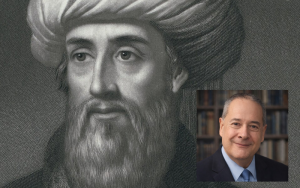
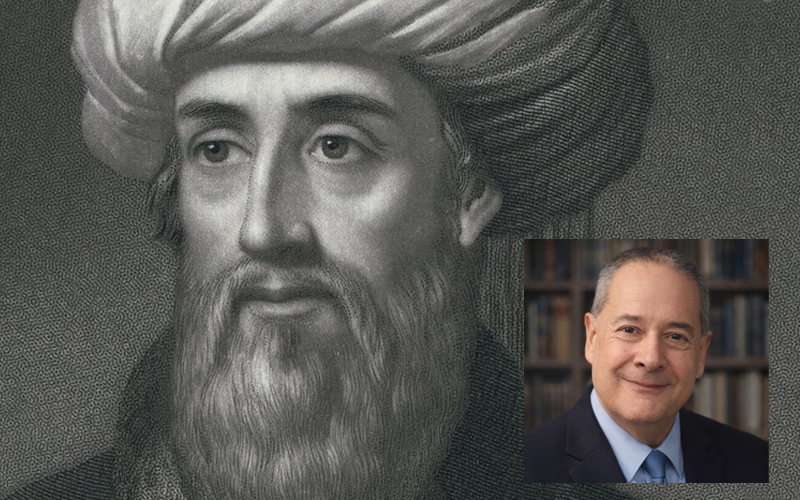
Cover Image: Flavius Josephus (left) was a Romean-Judean historian born a few years after the Resurrection and wrote about the early activities of Christians. Jesús Fernández-Pedrera Correa (right) is an independent historical researcher from Spain.