#EU #Germany #Saxony-Anhalt – Alternative for Germany (AfD) party leader Ulrich Siegmund moved quickly to advance a platform that targeted more than $50 million in annual public payments to the Catholic and Protestant churches after the right-wing party scored a decisive first-place finish in Saxony Anhalt’s state election on September 6th, 2026.
The AfD captured 43.8 percent of the vote and 39 of 83 seats in the state parliament, more than doubling its 2021 result. The Christian Democratic Union collapsed to 17.2 percent. The right-wing party fell three seats short of an outright majority and faced a continued “firewall” from mainstream parties that refused to form a coalition with it. Siegmund, 35, declared the outcome a “mandate to govern” and said the party would not accept a minority government.
Central to the AfD’s campaign program was a plan to radically reshape the state’s Staatsleistungen—recurring compensation payments that originated in the early 19th century after secularization of church property. Those transfers amount to roughly 43 million euros a year. Early drafts of the manifesto called for eliminating the payments entirely and stopping the state from collecting church tax on the churches’ behalf. The final version kept the overall sum but proposed redistributing it among all Christian communities according to membership, limiting spending to clergy salaries and building maintenance, and requiring full financial disclosure.
Siegmund and the party accused the major churches of abandoning Christian teaching in favor of what they termed “rainbow ideology” and left-leaning political activism. The AfD argued that the large “church-tax churches” no longer deserved privileged public support. Smaller free churches and other Christian groups would have been eligible for a share of the funds under the revised proposal.
Church officials warned that an abrupt cutoff would threaten parishes, social services, and historic buildings. Legal experts noted that the payments rest on treaties and constitutional provisions that a single state government cannot cancel unilaterally; any change would require federal legislation and would almost certainly face court challenges.
With government formation still unresolved four days after the vote, it remained unclear whether Siegmund would even be in a position to enact the program. He had raised the possibility of new elections if no stable majority emerged.
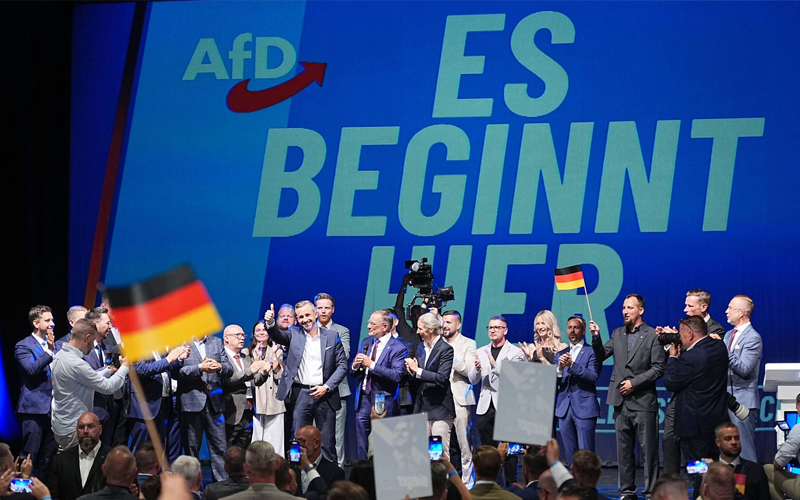
Cover Image: The AfD party leader and members celebrating their victory on September 6th, 2026.