#UK #England – A High Court judge has authorized the withdrawal of food and water from a 28-year-old man with a severe brain injury, ruling that continued treatment was not in his best interests.
Justice McKendrick handed down the decision in the Court of Protection on 26 August 2026 after a four-day hearing the previous week. The man, known only as F.H.R. because of reporting restrictions, was expected to die within one to three weeks once feeding and fluids stopped. The judge ordered that a transparency order anonymizing the family remain in force until F.H.R.’s death
F.H.R. suffered a catastrophic hypoxic brain injury in January 2020 after attempting to hang himself. He was 22 at the time. For nearly five years his mother, anonymized as F.N., cared for him at home with NHS-funded support. Relatives said he was stable there and that they saw signs of awareness, including responses to voices and requests.
In April 2025 the court ordered him moved to a specialist care home, initially for an assessment of consciousness that was intended to inform a later decision on whether to withdraw life-sustaining treatment. The family said his condition deteriorated after the transfer. They reported multiple emergency hospital admissions for infections, including aspiration pneumonia and, at times, sepsis. His mother said there had been no pneumonia during more than four years of home care.
Contact was then sharply restricted. After the family called an ambulance against the home’s wishes, managers alleged “challenging behaviour.” From April 2025 the mother was barred from in-person visits and limited to a daily 20-minute video call. A gagging order followed a social-media video she posted about her son’s case. In April 2026 the same judge refused to return F.H.R. home and sent him back to the care home after a hospital stay.
NHS North East London Integrated Care Board later applied to stop CANH. The family and treating clinicians had, at a best-interests meeting in March 2026, agreed that treatment should continue. The mother was supported by the Christian Legal Centre.
Neurorehabilitation specialist Dr Judith Allanson told the court F.H.R. was not in pain or distress and had some conscious awareness. She said she saw him smile when his father spoke about football and Arsenal, and that another expert saw him shed tears when his father spoke about God and prayed. She recommended a review of sedative medication and consideration of a tracheostomy before any final assessment of awareness.
Court-appointed rehabilitation consultant Dr Ajoy Nair accepted that a tracheostomy review should be attempted if possible, but said further “tinkering” with medication was meaningless given the severity of the injury. He recommended withdrawal, describing the expected course as dehydration, multi-organ failure and cardiorespiratory arrest within one to three weeks.
The judge accepted Dr Nair’s recommendation. He said continuing nutrition and hydration would consign F.H.R. “to an existence of distress with such limited consciousness and communication that his life is devoid of comfort or pleasure,” with little prospect of change. He treated the family’s observations as unreliable, saying love “has the power to impair our objectivity.”
In a statement released through her solicitors, F.N. said she did not want her son’s life prolonged artificially, but called it unacceptable to bring about his death in this way. “All I wanted was for my kid to be allowed to live naturally and to die naturally,” she said. She accused the system of removing him from home, isolating him, allowing his health to collapse and then obtaining an order to starve him to death. “It is probably too late now to save my son, but if so, the system which has done this to him should be held to account.”
Hearings of this kind are often subject to anonymity orders, which is why the case proceeded largely out of public view.
Similar Situations in the United Kingdom
In 2023, Indi Gregory, eight months old, had mitochondrial disease. Nottingham University Hospitals sought to withdraw treatment. Her parents wanted a transfer to Italy. The Italian government intervened and provided emergency citizenship to Indi, and a hospital in Italy wished to provide treatment. Justice Peel refused and ruled transfer was not in the child’s interest. The Court of Appeal and European Court of Human Rights would not intervene. She was moved to a hospice, treatment was withdrawn, and she died in November 2023.
Alfie Evans, 23 months old, had a progressive, undiagnosed neurodegenerative condition. Alder Hey sought to stop ventilation. His parents wanted him moved to the Vatican’s Bambino Gesù hospital in Rome. Justice Hayden ruled continued ventilation was not in his best interests. Appeals failed. Ventilation was withdrawn in April 2018; he died four days later.
Charlie Gard, eight months old, had a rare mitochondrial disease. Great Ormond Street sought to withdraw ventilation. His parents wanted to take him to the United States for experimental treatment. The High Court, Court of Appeal, Supreme Court and European Court of Human Rights all refused. Treatment was withdrawn and he died in July 2017.
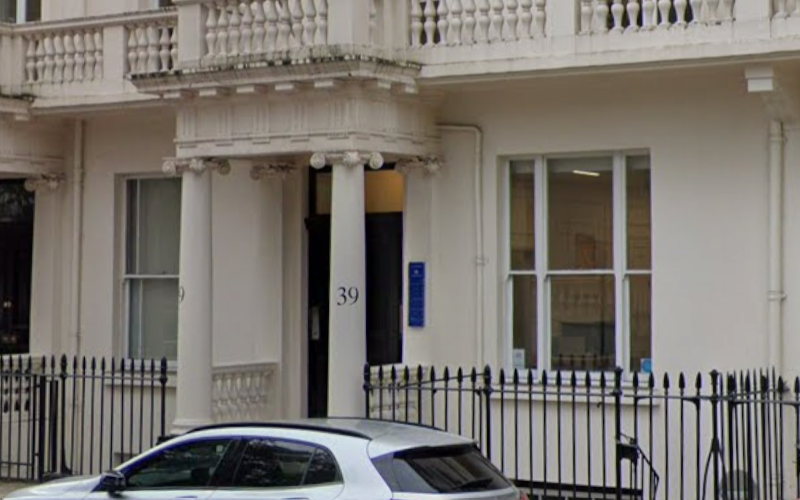
Cover Image: NHS North East London at 20 Churchill Place, London.