#HolyLand – Archaeologists working beneath the Church of the Holy Sepulchre, the traditional site of Jesus’ crucifixion and tomb, found clear evidence of a cultivated garden dating to approximately 2,000 years ago, findings that closely matched a description in the Gospel of John.
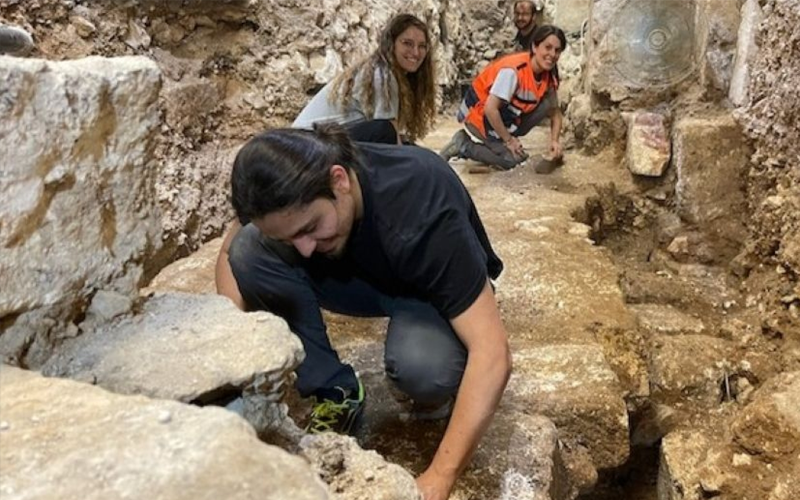
The discovery emerged during extensive excavations that began in 2022 as part of a major restoration of the church’s 19th-century floor. Led by Professor Francesca Romana Stasolla of Sapienza University of Rome, the project marked the most significant archaeological investigation at the site in nearly two centuries. It received approval from the Greek Orthodox, Armenian Apostolic, and Roman Catholic communities that share custody of the church, along with a license from the Israel Antiquities Authority.
In soil samples taken from layers under the basilica floor, the team identified olive and grape pollen, seeds, and other botanical remains. Archaeobotanical analysis placed these traces in pre-Christian strata corresponding to the first century CE. Low dry-stone walls and soil-filled plots further indicated that small cultivated areas had been created after an earlier Iron Age quarry was abandoned. Researchers also recovered Iron Age pottery, oil lamps, coins, and additional artifacts that documented the site’s long transition from stone extraction to agricultural use and then to rock-cut tombs.
“The quarry had to be gradually abandoned, and after the stone extraction ended, it was used for agricultural areas and tombs. That’s how it must have been in the 1st century CE,” Stasolla said. She noted that the findings were especially significant in light of the Gospel of John, whose author appeared familiar with Jerusalem at the time. The Gospel states: “Now in the place where he was crucified there was a garden, and in the garden a new tomb in which no one had yet been laid.”
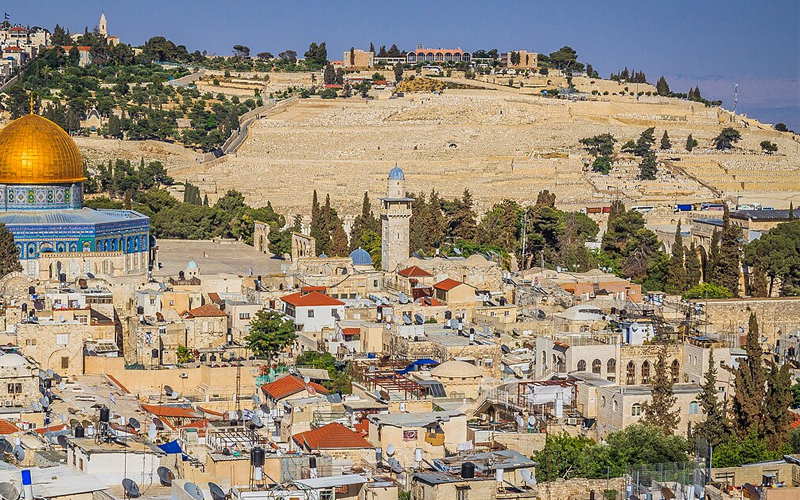
At the time of Jesus, the area lay outside Jerusalem’s city walls on what is known as Gareb Hill. Only later, under Emperor Hadrian in the second century CE, did it become incorporated into the Roman city of Aelia Capitolina. The combination of cultivated plots of vines and olive trees alongside rock-cut burial chambers produced a mixed funerary and agricultural landscape that closely resembled the biblical account.
Later stages of the excavation, completed in 2025, allowed researchers to reconstruct the broader topography using ground-penetrating radar, 3-D mapping, and further analysis of pollen and plant remains. A preliminary report published in the journal Liber Annuus detailed how the deepest sections of the quarry, some reaching nearly 20 feet below the present floor, had been filled and divided into small plots suitable for cultivation and grazing. The landscape also showed signs of sporadic pastoral activity amid the tombs.
The Church of the Holy Sepulchre has been venerated since the fourth century, when Emperor Constantine ordered a church built over the site identified by tradition as Golgotha and the nearby tomb. While the new botanical evidence did not independently provide supporting evidence of the specific events of the Gospel narrative, it provided strong archaeological support for the physical setting described in John 19:41 and reinforced the historical plausibility of the traditional location.
Analysis of the vast quantity of material recovered—including tens of thousands of pottery fragments—continued after the main excavation phases concluded. The discoveries offered a rare window into the everyday landscape of first-century Jerusalem just beyond the city walls, where quarries, gardens, and tombs once existed side by side.
Cover Image: Excavation work at the Church of the Holy Sepulchre (per Archivio Università di Roma Sapienza).