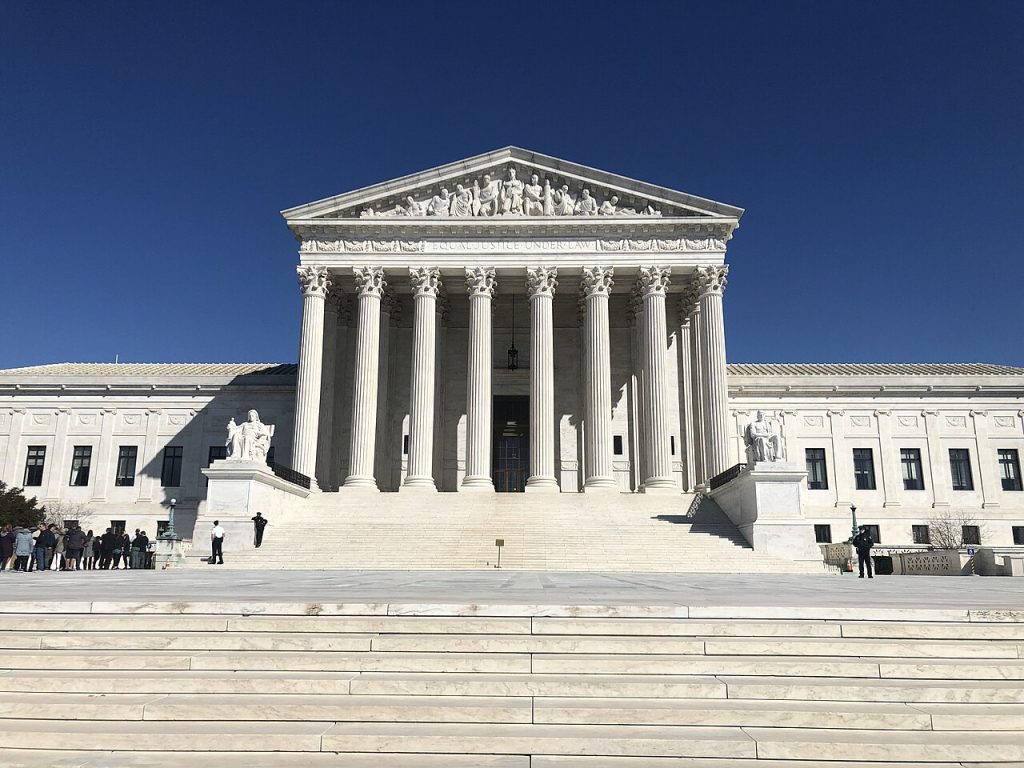
#USA #DC – The U.S. Supreme Court on May 26, 2026, declined to intervene in a long-running federal lawsuit accusing the United States Conference of Catholic Bishops (USCCB) of misleading donors about the use of funds from the annual “Peter’s Pence” collection.
The high court issued the denial as part of its order list, without comment. Justice Ketanji Brown Jackson did not participate in the decision, as the case originated in the U.S. District Court for the District of Columbia where she previously served.
The lawsuit, filed in January 2020 by Rhode Island parishioner David O’Connell and seeking class-action status, alleges that the USCCB misrepresented Peter’s Pence as primarily supporting the Pope’s charitable works for victims of natural disasters, war, and health crises. Plaintiffs claim that a significant portion of the funds was instead directed toward investments in luxury real estate, Hollywood film productions, and other non-charitable purposes.
O’Connell and co-plaintiffs sued the USCCB for fraud, unjust enrichment, and breach of fiduciary duty, arguing that parishioners were induced to donate based on misleading descriptions shared from pulpits and in promotional materials.
The USCCB, represented by the Becket Fund for Religious Liberty, sought to dismiss the case under the “church autonomy doctrine,” a First Amendment principle protecting religious institutions from excessive government entanglement in internal affairs. They argued that allowing the suit to proceed would require courts to scrutinize how the Church describes and administers a centuries-old religious offering, potentially exposing every faith tradition to similar litigation.
Lower courts disagreed. The district court refused to dismiss the case, applying neutral principles of law to the fraud claims. In April 2025, the U.S. Court of Appeals for the D.C. Circuit ruled that denials of church-autonomy defenses are not immediately appealable, meaning the case must continue in the lower court. The USCCB’s petition for certiorari to the Supreme Court was denied.
Supporters of the lawsuit, including transparency advocates within the Catholic community, view the decision as a victory for donor accountability. Critics of the USCCB’s handling of the collection have highlighted past media reports from Italy detailing Vatican investments funded in part by Peter’s Pence.
The Becket Fund warned that the ruling could have far-reaching effects, potentially inviting intrusive discovery into church communications and finances across denominations. “If parishioners can claw back a religious offering they voluntarily gave, every religious offering to a house of worship… is in jeopardy,” the organization stated in filings.
The case now returns to the district court for further proceedings, where issues such as class certification and the merits of the fraud claims will be addressed. No trial date has been set.
Peter’s Pence, also known as the Obolo di San Pietro, dates back over 1,000 years as a direct offering to the Pope. The USCCB promotes it annually but maintains it does not control how the Vatican ultimately uses the funds.
This development comes amid ongoing discussions within the Catholic Church about financial transparency and trust in institutional leadership. The lawsuit does not directly involve the Vatican but focuses on representations made by U.S. bishops to American donors.
Image: The Supreme Court of the United States building.