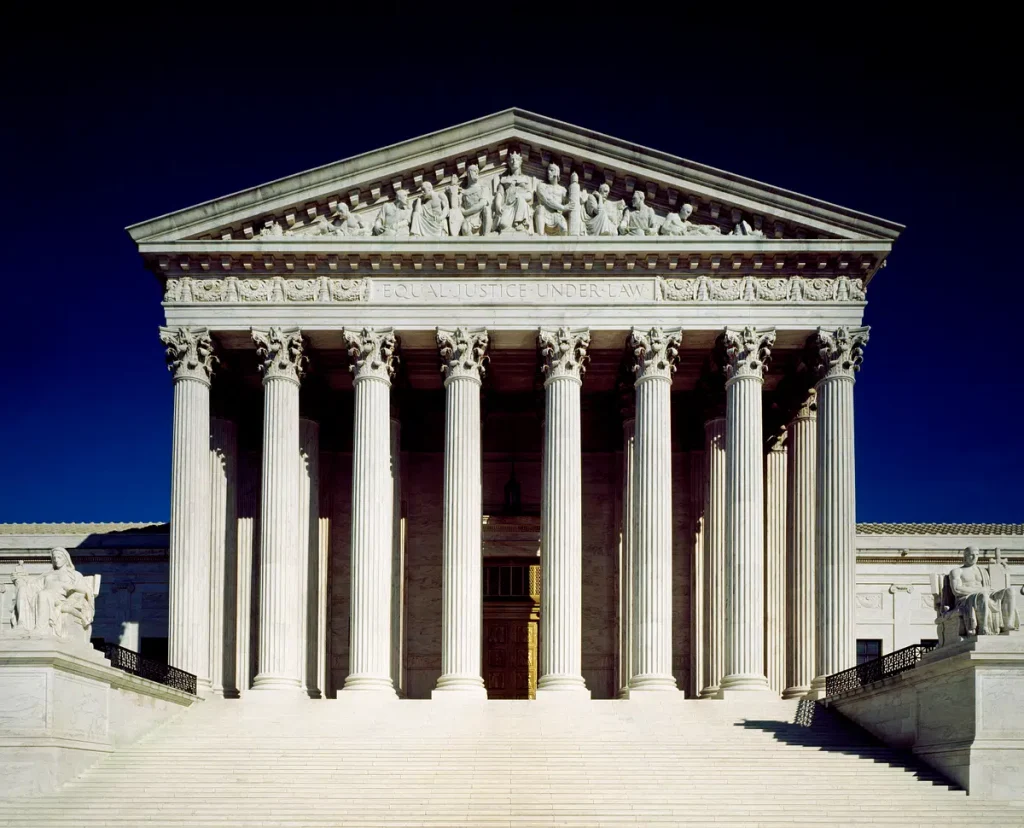
#USA #DC – The U.S. Supreme Court case Chiles v. Salazar was decided on March 31st, 2026, in a 8-1 ruling. The court case addressed a First Amendment challenge to Colorado’s 2019 ban on “conversion therapy” for minors when applied to licensed counsellors providing verbal therapy. Justice Gorsuch’s majority opinion held that the ban regulates speech content and requires strict scrutiny, remanding the case rather than striking down the law outright, with Justice Jackson dissenting over risks of harm to children. The decision involved a Christian counsellor, Kaley Chiles, and could affect similar bans in about two dozen states, with Catholic and Protestant Christian groups supporting it as protecting free speech and diverse counselling options for minors.
Kaley Chiles is a licensed professional counsellor in Colorado with a master’s degree in clinical mental health. She uses only talk therapy (spoken conversations) and does not start with predetermined goals, prescribed medications, or use physical/aversive methods. She respected clients’ self-determination: some minors seek help with social/family issues while affirming their identity, while others want to reduce unwanted same-sex attractions, change behaviors, or achieve harmony with their bodies. Chiles helps them pursue their own stated objectives
In 2019, Colorado enacted a law that prohibited licensed mental health professionals from engaging in “conversion therapy” with minors. It defined this therapy broadly as any practice or treatment that attempts to change an individual’s sexual orientation or gender identity, including efforts to change behaviors, gender expressions, or reduce same-sex attractions/feelings. Violations can lead to fines, probation, or loss of license. Importantly, the law includes exceptions: it explicitly allows “acceptance, support, and understanding for… identity exploration and development” and assistance for those “undergoing gender transition.” Chiles sued, arguing the law unconstitutionally restricted her speech as applied to her practice. Lower courts (district and Tenth Circuit) upheld the law as a regulation of professional conduct that only incidentally burdened speech, applying rational-basis review, which it survived. The Supreme Court granted certiorari to resolve circuit conflicts on how the First Amendment applies to such laws for talk therapy.
According to Justice Neil Gorsuch (joined by Chief Justice Roberts and Justices Thomas, Alito, Sotomayor, Kagan, Kavanaugh, and Barrett), the Court held that Colorado’s law, as applied to Chiles’s talk therapy, regulates speech based on viewpoint and requires strict scrutiny under the First Amendment. The lower courts erred by applying only rational-basis review. The judgment was reversed and remanded for further proceedings consistent with this opinion. Justice Kentanji Jackson argued the law regulates professional medical conduct for minors that incidentally involves speech, so rational basis should apply. According to her, States have broad authority to protect patients from harmful practices based on medical consensus that conversion efforts are ineffective and linked to increased risks of depression, anxiety, and suicidality. Therefore, the majority risks undermining standards of care for licensed professionals.
The Court did not fully strike down the law or rule on physical/aversive practices—it was a narrow as-applied ruling focused on talk therapy, but the logic signals significant vulnerability for similar restrictions. The case will return to lower courts to apply strict scrutiny, and the ban is unlikely to survive for pure talk therapy. Nearly half of all U.S. states have similar bans. This ruling does not automatically invalidate them but provides strong grounds for challenges, especially for talk therapy components. It may lead to narrower enforcement or new litigation.
Critics of the ruling worry it will weaken “protections” for minors and could affect regulation of other “talk-based” professional practices. Supporters hail it as protecting counsellors’ and clients’ autonomy against government-enforced orthodoxy.
In most Western countries, “conversion therapy”—defined as practices aimed at changing, suppressing, or redirecting a person’s sexual orientation, gender identity, or gender expression—is heavily restricted or banned, especially for minors and when performed by professionals. In Canada, Australia, and New Zealand, practice of “conversion therapy” is banned with criminal penalties. Canadians that engage in conversion therapy, or advertise or support its practice, or even take a minor abroad for it, can receive strong penalties of up to five years in prison. In the United Kingdom, there is no current regulation, but the current Labour government intends to legislate some in the near future. The following European nations also have bans in place: Malta, France, Germany, Belgium, Spain, Cyprus, Portugal, Norway, Iceland, and Greece (minors only). Most other European nations, particularly those in Central / Eastern Europe, have no ban whatsoever, including Hungary and Poland, which even encourage the practice.
Image: The Supreme Court of the United States building in Washington D.C.