#Analysis #UK – A new report from the pontifical charity Aid to the Church in Need (ACN) found that conditions for Christians had deteriorated in more than half of the 18 countries it examined between 2024 and 2026, with none showing overall improvement. The findings, published in late October 2026 in Persecuted and Forgotten? A Report on Christians Oppressed for Their Faith 2024–26, estimated that roughly 220 million Christians worldwide were directly exposed to persecution, while about 413 million lived in countries where serious violations of religious freedom occurred.
The study, which covered the period from August 2024 to June 2026, identified three main drivers of the worsening situation: extremist violence, repression by authoritarian governments, and rising religious nationalism. Researchers noted that persecution often intensified in specific regions rather than uniformly across entire nations, and that displacement had become a major concern as Christians fled conflicts in parts of Africa and Asia.
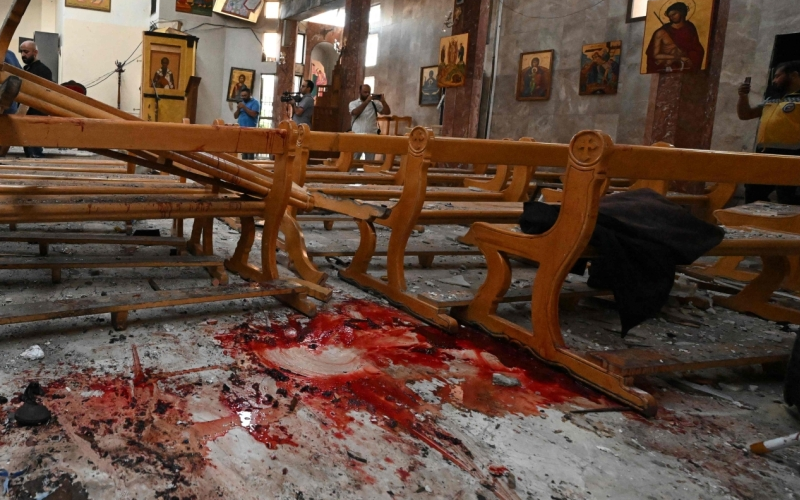
Sub-Saharan Africa remained a primary hotspot. Islamist militant groups expanded their reach across large areas of the continent, with six of the ten countries most affected by terrorism in the 2026 Global Terrorism Index located in Africa. In Nigeria, attacks by militants and other armed groups killed and displaced millions, including large numbers of Christians; ACN warned that prolonged displacement risked permanently altering the religious makeup of affected regions. In Burkina Faso and Mali, jihadist groups controlled or operated across substantial territory, forcing some Christian communities to follow Islamist social codes while subjecting others to killings and forced flight. Reports cited by the organization indicated that around 1,000 Christians had been killed in northern Mozambique amid an ongoing Islamist insurgency that involved beheadings, kidnappings, and the destruction of churches and homes.
Elsewhere, different pressures prevailed. In India, the report recorded more than 700 incidents of anti-Christian violence in 2025, linking the rise to increased social hostility and the expansion of anti-conversion laws that Christian groups said were used to target minorities. In Iran, arrests of Christians nearly doubled over a 12-month span. In Nicaragua, the government’s ongoing confrontation with the Catholic Church led to the arrest and exile of clergy, restrictions on ordinations, seizure of church institutions, and barriers to people entering the country with Bibles.
ACN cautioned that not every act of violence could be attributed solely to religion, as ethnicity, political instability, poverty, and competition over land and resources frequently overlapped with religious identity. The organization nevertheless argued that the religious dimension of many attacks was often underestimated outside the affected countries. The report combined national and regional analysis with firsthand testimonies, including that of Solomon Ako, a 33-year-old Christian from northern Nigeria who was abducted during a militant raid on his village. He described being whipped, chained, and pressured to renounce his faith.
The findings underscored a broader pattern of sustained pressure on Christian communities, with mass displacement compounding the effects of violence and discrimination in multiple regions. ACN presented the report as documentation of a human rights crisis that continued to intensify in many places, drawing on field research, partner accounts, and public data to track developments in the 18 priority countries.
Aid to the Church in Need is an international Catholic pastoral aid organization and Pontifical Foundation of the Catholic Church. It was founded in 1947 by Dutch priest Father Werenfried van Straaten, at the request of Pope Pius XII, initially to assist displaced German priests and refugees in the aftermath of World War II. The organization later expanded its work to support persecuted and suffering Christians worldwide through prayer, information, and practical aid such as church construction, seminary training, Mass stipends, and emergency relief. Elevated to Pontifical Foundation status by Pope Benedict XVI in 2011, ACN operates with national offices in more than 20 countries and relies entirely on private donations to fund thousands of projects annually across roughly 140 nations.
Cover Image: ACN United Kingdom headquarters at 12-14 Benhill Avenue, Surrey, England as seen on Google Maps with organization’s logo.