#Academia #Philosophy – A philosopher at Brigham Young University published research last year arguing that the early Christian testimony about Jesus’ resurrection was highly unlikely to have been a deliberate fabrication by his followers. Nathan Rockwood’s paper, “Was the Resurrection a Conspiracy? A New Mathematical Approach,” appeared in the open-access journal Open Theology in 2025.
Rockwood built his analysis on an existing mathematical method for evaluating conspiracy theories developed by David Grimes. The model incorporated both the number of people claiming to have witnessed a miracle and the length of time they maintained that claim. It assumed each potential conspirator faced a small annual chance—set at roughly 1 percent—of intentionally or accidentally revealing the deception, while also accounting for witnesses dying over time.
Applying the model to the resurrection accounts, Rockwood estimated a lower-end group of 16 witnesses that included the remaining apostles, Paul, James (described as Jesus’ brother), and several women associated with the empty tomb reports, including Mary Magdalene. Under those assumptions, the calculations showed a 95 percent probability that at least one person would have exposed a fabricated story within about 28 years. Expanding the group to 23 witnesses shortened that window to roughly 17 years.
Rockwood noted that early Christian sources depicted the disciples continuing to proclaim the resurrection for decades, with many facing persecution and, according to later tradition, martyrdom. He pointed out the absence of any reliable historical record of a key witness confessing that the accounts were invented. “So, their testimony is either deception or they were telling the truth. And it wasn’t deception,” he wrote. He described the findings as “an important step, though not the only step, in showing that the testimony of the disciples is true.”
The paper also addressed the 18th-century philosopher David Hume’s skepticism about miracle testimony. Rockwood argued that the combination of multiple witnesses and prolonged consistency provided stronger evidence of sincerity than Hume’s framework had allowed. He further contended that the biblical descriptions of repeated physical interactions and conversations with the risen Jesus made simple perceptual error or group hallucination a less complete explanation.
Coverage of the study, which gained renewed attention in late 2026, emphasized that the model did not claim to prove the resurrection itself occurred. Critics and the paper’s own framing noted that the results rested on assumptions about witness numbers, their independence, and the likelihood that any confession would have been preserved. The analysis addressed the conspiracy hypothesis specifically and did not rule out other naturalistic explanations, such as sincere but mistaken beliefs, visionary experiences, or the gradual development of oral traditions. Rockwood acknowledged that incomplete ancient records meant some potential counter-evidence might not have survived.
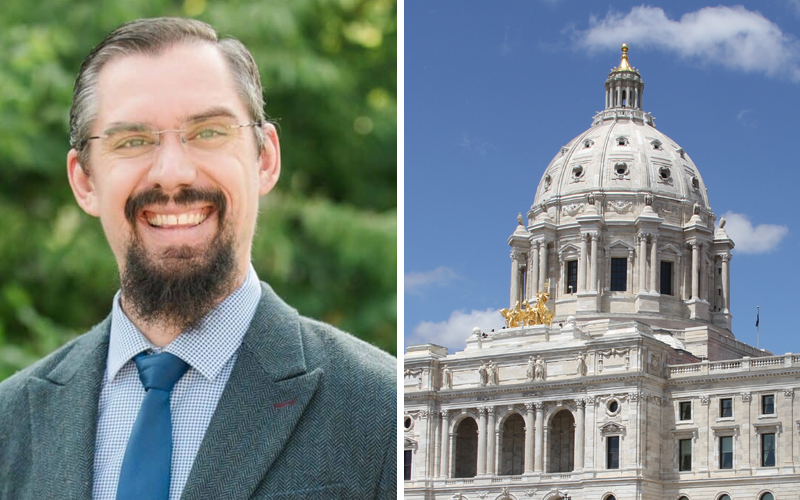
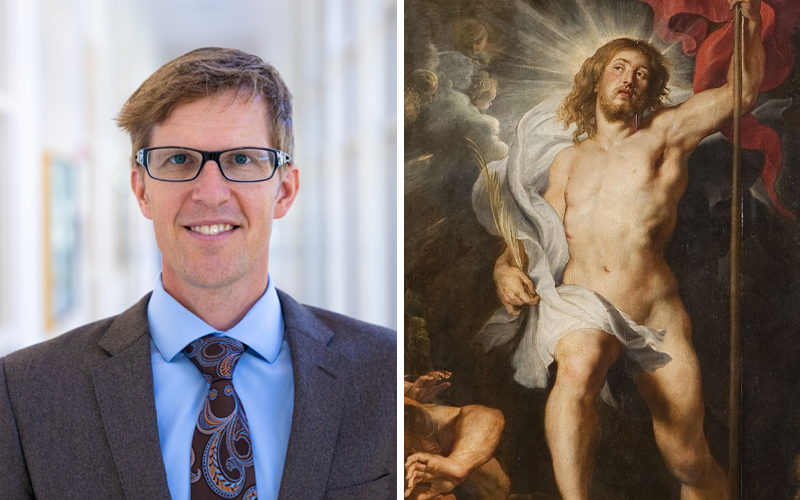
Cover Image: Dr. Nathan Rockwood is an associate professor at Brigham Young University in Utah (left: image taken by David John Arnett); The Resurrection of Christ by Peter Paul Rubens (right: kept in public domain).