#EU #Luxembourg – Europe’s highest court heard arguments last summer over whether the Catholic Church must erase baptismal entries when people demand to be “debaptized,” a dispute that pitted the European Union’s data-protection rules against the Church’s claim of religious autonomy.
The case, formally known as C-12/25 Bisdom Gent, reached the Court of Justice of the European Union after a Belgian data-protection authority ordered the Diocese of Ghent to delete a former parishioner’s name from its baptismal register. The individual, baptized as a child, requested full erasure in March 2021 under the General Data Protection Regulation. The diocese declined to remove the historical entry and instead added a notation that the person had left the Church.
Belgium’s privacy regulator sided with the requester in December 2023, finding that lifelong retention of sensitive religious data after an explicit break with the Church was disproportionate. The diocese appealed. In January 2025 the Brussels Court of Appeal sent five questions to the Luxembourg court, asking whether Article 17 of the GDPR, read together with the EU Charter’s protections for data privacy and religious freedom, required deletion or whether a marginal note would suffice.
A Grand Chamber hearing took place on June 30th, 2026. Church representatives, including the Commission of the Bishops’ Conferences of the European Union, argued that baptismal registers were not membership lists. They described the books as records of a one-time sacramental event that, under canon law, remains indelible and is used to verify eligibility for later rites such as confirmation or marriage. Forcing deletion, they said, would interfere with the Church’s internal legal order and its freedom to organize itself according to its own doctrine.
The bishops also pointed to the registers’ value as historical and genealogical sources and noted that the volumes are kept under restricted access, not circulated as public directories. A Vatican note issued in April 2025 reiterated that canon law permits correction of transcription errors but not cancellation of a baptism that actually occurred.
National authorities had already split on the same question. France’s Conseil d’État ruled in February 2024 that annotation of a person’s departure satisfied the right to object without requiring destruction of the record. Ireland’s Data Protection Commission reached a similar conclusion in 2023. The Belgian regulator’s order was the first to mandate outright erasure.
The Advocate General’s non-binding opinion was scheduled for Oct. 1, 2026. A final judgment is expected late this year or in early 2027, and would apply across all 27 EU member states. Until then, the physical registers in Ghent remained intact, with the disputed entry still carrying the annotation the diocese had added years earlier.
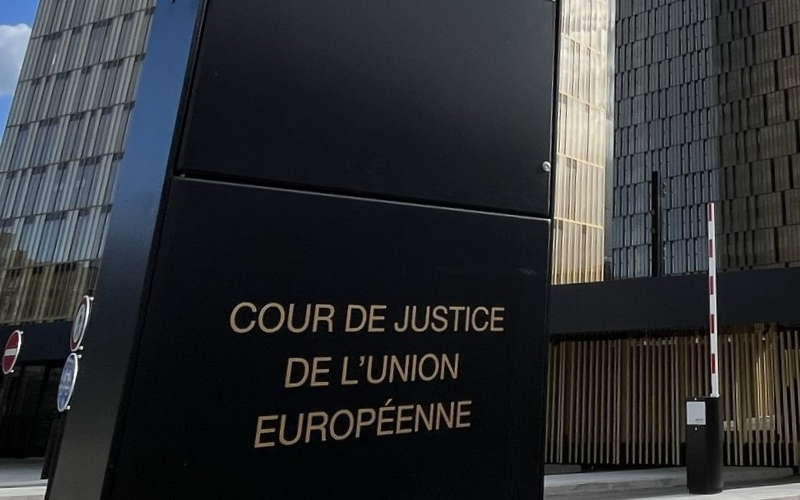
Cover Image: Palais de la Cour de Justice in Luxembourg City.