#EU #Ireland – The Irish government advanced plans on June 28, 2026, to introduce statutory paid leave for women experiencing early pregnancy loss, a move that drew immediate scrutiny for encompassing both miscarriages and abortions.
Enterprise Minister Peter Burke examined legislative changes that would grant five days of paid leave to employees who suffer a pregnancy loss before 23 weeks of gestation. Officials described the proposal as a compassionate measure aimed at supporting thousands of women each year who previously relied on sick leave or unpaid time off. The estimated annual cost stood at approximately €10 million. Critics and opposition, however, viewed the proposal as a financial incentive to have women abort their children amid other legislative changes to promote abortions.
The initiative marked the first time Ireland would offer dedicated statutory paid leave for pregnancy loss before viability. Government sources indicated that the same provisions would apply whether the loss resulted from a miscarriage or a termination. Heads of a bill were expected to be drafted in the coming months, with initial cabinet discussions slated before the summer recess.
The proposal followed years of advocacy from cross-party groups and campaigners who highlighted the absence of legal protections for women facing miscarriage. Private members’ bills on the issue had circulated previously, prompting the coalition government to develop its own framework after consultations with stakeholders.
Critics, including some conservative and pro-life voices, argued that explicitly including abortions in the leave entitlement amounted to indirect state support for the procedure. Supporters countered that the policy focused on physical recovery and emotional wellbeing, treating all early pregnancy endings with dignity regardless of circumstance.
Ireland legalized abortion in 2018 following a referendum that repealed the Eighth Amendment. The procedure remains available on request up to 12 weeks’ gestation, subject to existing regulations, with later access in cases involving health risks or fatal fetal anomalies.
Minister Burke’s department emphasized that the leave would provide practical workplace protections. Further details on eligibility, implementation, and funding were expected as the legislation progressed through the Oireachtas.
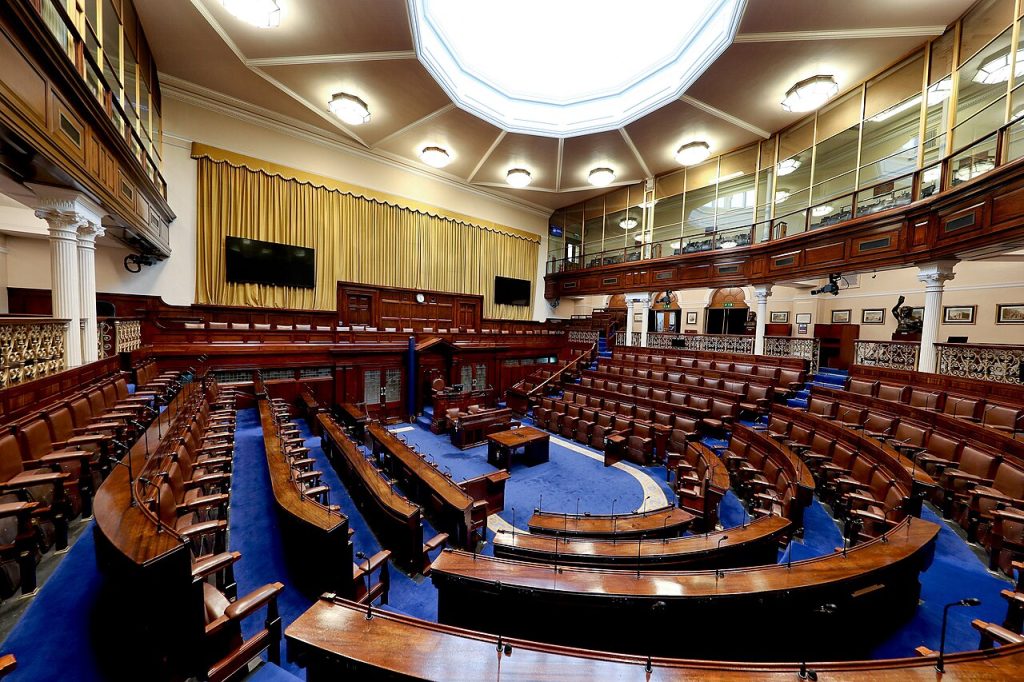
Image: Dáil Chamber, the lower house of the Irish parliament.