#Spain #EU -Noelia Castillo Ramos, a 25-year-old woman from Barcelona, Spain, died through legal assisted-suicide (euthanasia) on March 26, 2026, in a facility near Barcelona (reported as Sant Pere de Ribes or Barcelona area).
Noelia had endured a difficult life involving mental health and traumas. In 2022, after reportedly being the victim of a gang rape (or multiple sexual assaults) while in a state-supervised center, she attempted suicide by jumping from a fifth-floor building. She survived, but was left paraplegic, with severe chronic physical pain and psychological suffering. She had a history of prior suicide attempts and described feeling profound isolation and unbearable pain.
She formally requested euthanasia in April 2024 through Catalonia’s oversight body (composed of doctors, lawyers, and bioethics experts). The request was approved based on medical and legal assessments confirming her condition as serious, incurable, and involving intense, debilitating suffering. She expressed a consistent desire to end her life “with dignity”, stating in interviews that she had “always felt alone” and had no doubts about her decision.
Her father launched a prolonged legal challenge, arguing that her mental health issues (including depression) impaired her capacity to make such a decision and that more treatment or support should be provided instead. The case involved multiple appeals in Spanish courts, which ultimately upheld her right to proceed. It escalated to the European Court of Human Rights, which rejected the family’s request for interim measures to halt the process on March 24, 2026.
The euthanasia occurred at around 6 p.m. local time on March 26. The case has reignited debates in Spain about the scope of the euthanasia law—particularly for younger patients, mental health-related suffering, and whether adequate psychological/social support is provided as an alternative.
Catholic Church leaders responded to Noelia Castillo Ramos’s euthanasia on March 26, 2026, with sorrow, strong condemnation, and calls for prayer and better care for the vulnerable. Church leaders framed the case as a profound societal and institutional failure rather than a compassionate act.
The Subcommittee for the Family and Defense of Life issued an official statement expressing “deep sorrow” over Noelia’s situation. They described her story as reflecting “an accumulation of personal suffering and institutional failings that challenge the whole of society.”
Key points from the response of the Church has included clarification that euthanasia and assisted suicide are not medical acts but a “deliberate rupture of the bond of care.” They represent a “societal defeat” when offered as a response to human suffering. Noelia was not terminally ill; her case involved “deep wounds that cry out for attention, treatment, and hope” rather than death. The proper response to suffering is accompaniment, adequate care, and support — “when life hurts, the response cannot be to shorten the path, but to walk it together.”
Luis Argüello, president of the Spanish Bishops’ Conference, posted on social media: “We pray for Noelia, her suffering is shocking, but her true relief is not suicide.” He added that if “deliberately caused death is the solution to problems, then anything goes,” and emphasized: “A doctor cannot be the executor of a death sentence, however legal, empowering, or compassionate it may seem.”
Bishop José Mazuelos Pérez (Canary Islands, chairman of the subcommittee) stated: “We have all failed as a society.” He criticized Spain’s 2021 euthanasia law as “another step towards a culture of death” and a surrender in the humanization of medicine.
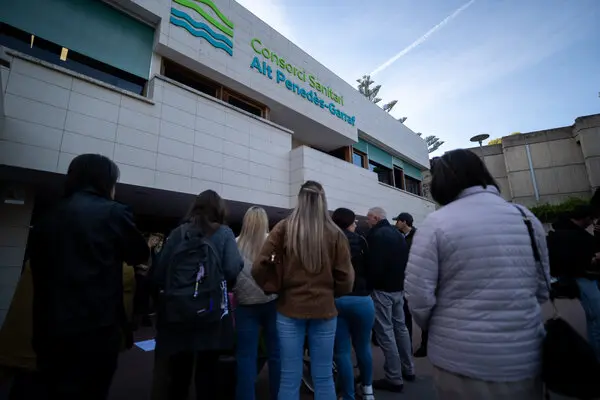
Prayer vigils and gatherings occurred outside the facility where the procedure took place, organized by Catholic groups and faithful. Individual bishops and clergy echoed the call for prayers for Noelia’s soul, her family, and those struggling with despair. Some described the event as “barbaric” or a sign of an “affluent society incapable of caring and loving.” Abogados Cristianos (Christian Lawyers), a Catholic legal advocacy group that supported Noelia’s father in the legal battle, issued statements denouncing the outcome as a failure of the system to protect the vulnerable. They highlighted concerns about mental health protocols and called for legal changes.
The Catholic Church’s longstanding teaching holds that intentional euthanasia is a grave violation of the sanctity of life and divine law, regardless of legal status or the patient’s expressed wishes. In this case, leaders highlighted Noelia’s youth, history of trauma, and psychiatric suffering as reasons why society should have prioritized treatment and support over death.
Spain is still considered a majority Catholic country in terms of self-identification, though the proportion has declined significantly in recent decades and religiosity is low. Recent surveys estimate the number of self-identified Catholics to be 55% of the total population.
Image: many people gathered to pray outside of the hospital where Noelia was euthanized.