#HolyLand – Taybeh (also spelled Tayibeh or Al-Taybeh) is the last entirely Christian village in the occupied West Bank, Palestine. Located east of Ramallah (about 30 km north of Jerusalem), it has roughly 1,200–1,500 residents, all Palestinian Christians belonging to Latin Catholic, Greek Orthodox, and Melkite Greek Catholic communities. The village is traditionally identified with the biblical town of Ephraim, where Jesus withdrew before his Passion (John 11:54). It features historic sites like the ruins of a 5th-century Byzantine Church of St. George.
The community faces escalating pressure from repeated Israeli settler incursions, vandalism, arson, and land encroachment, which have intensified since mid-2025 and continued into early 2026. Key recent developments include:
March 19, 2026: Around 30 settlers entered a quarry and cement factory on the western outskirts of Taybeh (owned by local Christian families). They reportedly conducted religious (Talmudic) rituals/prayers, raised an Israeli flag on a storage tank, and disrupted operations. The parish priest, Father Bashar Fawadleh (Latin-rite), described this as a new phase of incursions expanding beyond the eastern side of the village.
Ongoing incidents since June/July 2025: Settlers have set fires to agricultural land and olive groves, torched vehicles and property, sprayed hateful graffiti (e.g., “Revenge,” “Am Yisrael Chai”), damaged areas near the historic St. George Church ruins and cemetery, stolen livestock, and invaded private land. In July 2025, fires threatened the Byzantine church site; similar attacks (including vehicle burnings) occurred in February, November, and December 2025.
Broader restrictions: Residents report increased military checkpoints/barriers limiting movement, economic hardship (e.g., difficulty accessing farmland and the quarry), and a climate of fear. Much of Taybeh’s agricultural land (about 70%) lies in Israeli-controlled Area C, heightening vulnerability to encroachment.
Local clergy and residents describe the violence as systematic, aimed at land appropriation and creating insecurity that could lead to further displacement. Israeli authorities have investigated some incidents (e.g., arson and graffiti in February 2026), but clearance rates and accountability remain low according to Palestinian and church sources.
At least 16 families (plus individuals, totaling around 80 people) have left since 2023 due to insecurity and economic strain. Many fear the village’s Christian character and presence could erode further. Tourism has plummeted, agriculture is disrupted, and daily life is affected by barriers and fear of violence.
Father Fawadleh has repeatedly appealed for international solidarity, prayer, and intervention, urging the world to “come and see” and allow residents to live in safety and peace. He and other local priests emphasize that the community seeks peace, justice, and protection rather than conflict. The Patriarchs and Heads of Churches in Jerusalem, along with bodies like the Higher Presidential Committee for Church Affairs in Palestine, have issued statements condemning the attacks and calling for accountability.
Taybeh’s challenges occur amid wider settler violence in the West Bank, which has risen in recent years (hundreds of incidents annually documented by various monitors). While not all violence targets Christians specifically, Taybeh’s status as the sole fully Christian village makes its preservation symbolically important for the historic Christian presence in the Holy Land. Palestinian Christian leaders and some international observers link the incidents to broader demographic and territorial pressures, while Israeli sources sometimes attribute fires or disputes to other causes or ongoing security issues.
The situation remains tense but fluid. Church leaders continue to call for diplomatic pressure, protection, and support to help the community stay rooted in its ancient homeland.
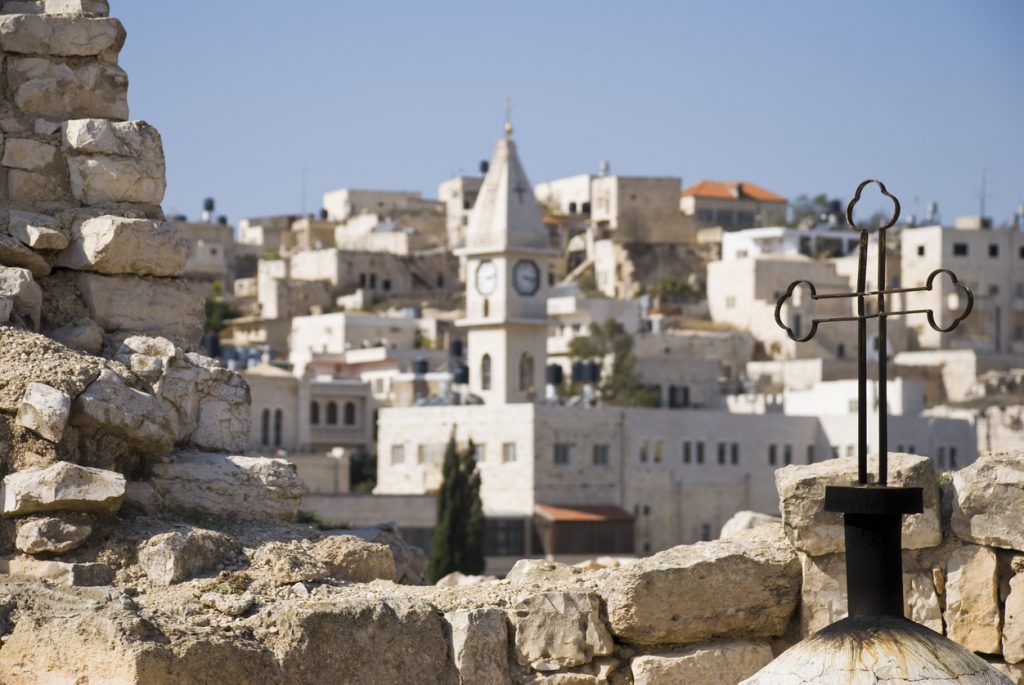
Image: the village of Taybeh before the escalating settler violence.